


Cross-border rail rallies regional connectivity
Driven by the BRI, growing transport network is increasing passenger, trade flows across Southeast Asia










Bridge to opportunity
No better can this be seen than in Laos, a landlocked nation whose roughly 500-kilometer northern border butts up against China's Yunnan province.
For 20-year-old Vilaysay from Oudomxay province in northwest Laos, after he boards the train to attend university across the border in Pu'er in Yunnan, his trip takes just over five hours at a cost of 173 yuan ($25).
A decade ago, his uncle would spend nearly three days by bus doing the equivalent trip for his own studies.
"The railway has changed everything," Vilaysay said. "Now it's easy to study, travel and explore new opportunities in China."
Since its opening in December 2021, the 1,035-kilometer China-Laos Railway has ended Laos' history of having no trunk line — a major, long-distance, high-capacity route — and brought about a new era of connectivity. The line has transformed travel times and trade routes, becoming a catalyst for development along its path.
A Chinese proverb says, "When a road opens, a hundred industries thrive". That has proved true in Laos. With daily trains linking cities and towns, new trade hubs, industrial parks and tourism zones have sprung up near stations. Chinese companies are investing in logistics, clean energy and manufacturing, while Laotians — even in their 70s — are enrolling in night schools to learn Chinese. "Parents want their children to speak Chinese because it means better job prospects," Vilaysay said.
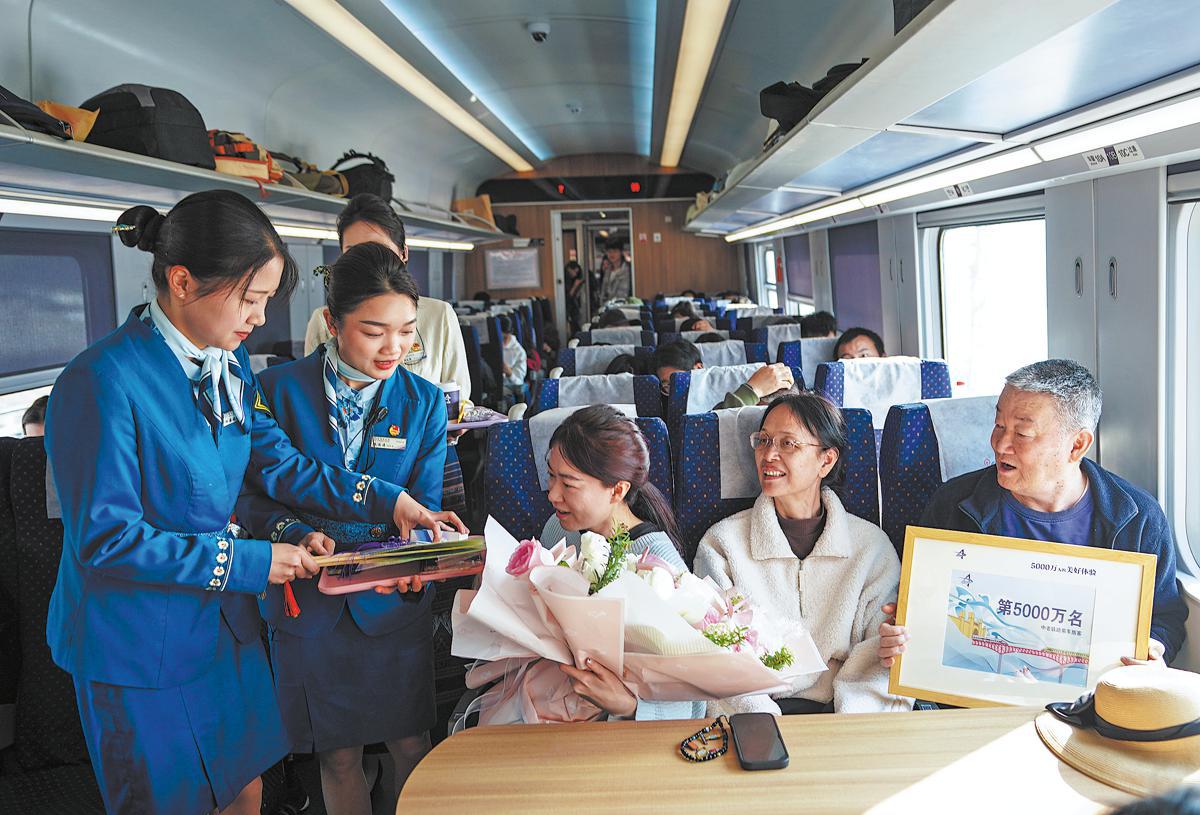
The railway has also proved a magnet for travelers. As of mid-October, it had operated 85,000 passenger trains and facilitated more than 60 million passenger trips, including over 600,000 cross-border trips for passengers from 115 countries and regions.