
The China Story
at your Fingertips
OPEN

China's 15th National Games will open on Nov 9 across the Guangdong-Hong Kong-Macao Greater Bay Area, marking the first time three regions have co-hosted the country's premier multi-sport event.

Hong Kong show jumping specialist Raena Leung said that, a decade ago, riders from the special administrative region used to enjoy an obvious advantage at nationwide equestrian events, but that is no longer the case, as the competitive level of riders from the Chinese mainland continues to rise.
"I started to compete in jumping events in the Chinese mainland in 2011. Back then, international competitions were just starting to emerge there. We were quite confident, and we would win those competitions, even without riding our own horses, due to the number of Hong Kong riders training in Europe at the time," Leung said after qualifying for the individual show jumping final at the 15th National Games in Shenzhen, Guangdong province on Wednesday.
"However, if you ask me now, even if I have a pretty good horse that's suitable for me, I can't say with certainty that I can win every competition. I don't think that's possible anymore, as the quality of the horses and the skills of the riders have really improved a lot," she said.
She credits the improvement to the fact that more young riders are able to regularly attend and compete at equestrian events, as well as train in Europe or work with foreign coaches.
"More importantly," she added, "their determination to excel in equestrian events is very strong, so they put in all their effort to learn and fully commit to it."
Many riders from the Chinese mainland now train, compete and buy horses in Europe. Furthermore, they bring that rich experience back home, to share with the domestic equestrian community, Leung said.
Also, the number of equestrian events, which cater to different levels of riders, being held in the mainland has soared in recent years to accommodate the surge in participants, she noted.
"Equestrian competitions, such as show jumping and dressage, are being held all over the country — in Beijing, Shanghai and Hangzhou. I feel that riders have a competition that they can participate in every week if they want to," said Leung who also coaches now.
"I often take young riders to compete in the Chinese mainland, and, sometimes, just to watch competitions there, so they can learn from good local riders," she said.
Hebei rider Wang Yunjing, who, on her horse Hoselinde, qualified in second place for the individual show jumping final at Shenzhen Guangming International Equestrian Center, agreed that there has been significant development in the mainland's equestrian prowess, both in terms of training facilities and techniques.
"For one, more foreign coaches are coming here to share their experience and introduce new things. Additionally, more people are getting involved in the sport, leading to improvements in all aspects," Wang said.
Wang, 27, fell in love with horse riding when she was 10. "There were only about a dozen young equestrian athletes in the Chinese mainland when I first started, and now that number has increased to more than 100," she added.
Those young athletes are more fortunate, as they have better conditions in which to train and improve their skills, said Wang, who has been training in Germany. "I am sure Chinese riders will win medals at the Olympics one day, and I believe it won't be long before they do."
What's made her more pleased is that, as well as riders' equestrian skills, the level of care and the wellbeing of the horses, which are seen as equal partners of the riders, has also been stepped up in the mainland, gradually aligning with international standards, Wang said.
With the support from the Hong Kong Jockey Club, the venue for the equestrian events at the National Games is equipped with an on-site equine clinic, which reflects the highest commitment to the animals' welfare and could be an example for the sport in China going forward.
Rebecca Parkes, an equine veterinarian with HKJC who leads a team of experts in running the unique facility, which can carry out surgeries on the horses if necessary, said that it's the first time the National Games have incorporated such a comprehensive veterinary facility.
"If any of the horses get particularly sick, or suffer an injury, then we're here. That's what the surgery is for," Parkes said.
As the level of competition in the mainland is increasing, the level of professionalism in equine veterinarian services also needs to be stepped up, Parkes said.
"There's a demand for high quality veterinary care, which is what we're trying to deliver here."
In Europe or the United States, at major competitions, there is usually a surgical facility close by, so if a horse gets sick or injured, they can receive timely treatment. That's why HKJC helped to design and build the clinic, to ensure that the horses have the care that they need, she added.
Equestrianism in the mainland has come a very long way since her first visit in 2015, said Parkes.
"The level of equestrian sport in China is now quite high," she said. "And I think the welfare standard of the sport has progressed as well."
Parkes has also been sharing her knowledge and providing hands-on training for vets within the mainland who want to become equine specialists. She believes that more equine vets are needed as the interest in equestrian sports continues to grow.
"There are some really great horse vets here, but there's not enough of them," she said, adding that the National Games' equestrian program is the first time she has been involved with a competition in the Chinese mainland.
Besides fracture specialists and farriers, the team has a pharmaceutical specialist available in Hong Kong if needed, Parkes said. "If she is required here, she can jump on the high-speed train and be here very quickly. Fortunately, though, we've had to treat very few horses."
HKJC CEO Winfried Engelbrecht-Bresges highlighted the new equestrian site in Shenzhen as a prime example of cooperation between Hong Kong and the Chinese mainland.
He hailed the National Games equestrian program, saying it was "of very high international standards — beautifully designed, highly functional and operated by a well-trained professional team."
Engelbrecht-Bresges also highlighted the maiden collaboration between the National Games and HKJC's world-class anti-doping laboratory to ensure the integrity of the equestrian competitions.
"The partnership ensures world-class facilities, top-level expertise and fairness throughout the National Games," he said.
He recalled that one of HKJC's first forays into the mainland was to assist the 2010 Guangzhou Asian Games, when the club established an equine disease-free zone.
"The legacy is now a horse racing training center in Guangzhou. And, with the boost from the National Games, Shenzhen now also boasts high-level equestrian facilities."
Xinhua contributed to this story.
cuijia@chinadaily.com.cn




After leading her side to glory in the women's soccer competition at the 15th National Games, Jiangsu head coach Chan Yuen-ting has said she's keen to step out of her comfort zone to help further develop Chinese women's soccer.
"I want to see where there might be better opportunities for me to try new things or develop further," the 37-year-old Hong Kong native said following her team's dramatic 1-0 victory over Hubei in Foshan, Guangdong province, on Saturday.
In the hunt for Jiangsu's first National Games title in 12 years, Chan had anticipated a challenging game, and it proved thus, with the competition finale quickly developing into a nail-biter.
It remained deadlocked until the final minute, when two promising young Steel Roses proved to be the decisive thorn in the side of Hubei's staunch defense.
In a move that proved pivotal, Chan sent on Huo Yuexin in the 77th minute. When a long pass from Shao Ziqin found fellow Team China striker Huo in the box, the 20-year-old calmly slotted home the golden goal.
"Before I was about to come on as a substitute, the coach told me to boldly showcase myself, not to be afraid and to push forward with the ball," Huo said afterward.
"This gold medal means a lot to us — finally, we completed the team's four-year-long mission," said Chan.
When Chan took on the role as head coach of the Jiangsu women's team in 2022, the Women's Super League side had no sponsors, no foreign players and a threadbare squad. By winning the women's soccer title at the Games, Chan said she had delivered on her promises when she took the job.
"I've completed a most important, and personally significant task. I'll now take a break, go back to Hong Kong and enjoy a bowl of noodles," Chan said with a smile.
Chan began playing soccer in high school, and after graduating from The Chinese University of Hong Kong in 2010, she decided to leave the field of science and engineering to pursue a professional career in the sport.
In 2016, at 27 years old, Chan took the helm at Eastern Sports Club and led the team to victory in the Hong Kong Premier League, becoming the first female soccer coach ever to lead a men's team to a top-flight league championship. In 2017, she became the first woman to coach a male soccer team in a top-flight continental competition, when Eastern played Guangzhou Evergrande in an AFC Champions League match.
In 2019 Chan was appointed head coach of China's under-16 women's national team, before transitioning to the Chinese Women's Super League, taking the Jiangsu job in 2022.
Chan said she has learned a lot in Jiangsu over the past three years. "We have gone through a lot together, experiencing both joy and bitterness," she said, adding that there's always room to improve.
"In the future, I hope to become a better coach and contribute further to Chinese women's soccer."
Speaking about the development of the women's game in China, specifically the Women's Super League, Chan believes that there is great potential.
"The domestic soccer league has given players a platform to perform well — it has the potential to develop into the best women's league in Asia," she said.
She also noted that China's U-17 and U-20 women's teams have performed well in international competitions over the past few years thanks to the growing number of talented youngsters.
"I have high expectations for the future development of Chinese women's soccer, and hope that young internationals like Huo can shine on bigger international stages," she said.
Since taking charge at Jiangsu, Chan and the coaching staff have been studying the technical characteristics and development trends of modern women's soccer, experimenting with new formations and playing styles, while nurturing promising talent.
Chan has often encouraged the players, especially the younger ones, to confidently showcase their skills and play in their own style.
"I hope that, through our efforts and the exchanges during the Games, all of the teams will improve, allowing Chinese women's soccer broader development opportunities," she said.
Jiangsu's triumph in Foshan was widely seen as a testament to exchanges between the mainland and Hong Kong in terms of talent and soccer development.
Using herself as an example of those exchanges, Chan noted with a smile: "The games are jointly hosted by Guangdong, Hong Kong and Macao, so I am also part of that."
She added that she hoped greater sports exchanges between the Chinese mainland and the two special administrative regions will become the norm, rather than the exception.
"I hope that players from Hong Kong and Macao will get more opportunities to showcase their talent at professional soccer clubs in the Chinese football pyramid, and that coaches from the two SARs can engage more frequently and deeply with their mainland counterparts," Chan said.
qiuquanlin@chinadaily.com.cn

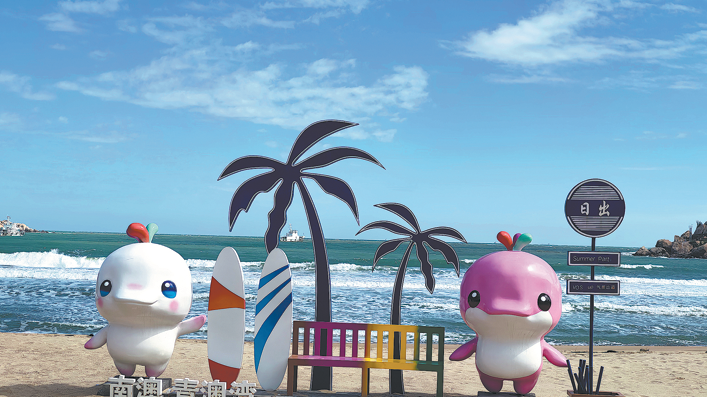
Surfers with shortboards jog across the wet sand and paddle through choppy waters one after another. They read the restless waves, choose their moment, and catch a powerful one. In one fluid motion, they pop up and begin their ride, carving explosive turns, launching into technical airs, and turning the ocean's chaos into their stage.
This was the scene at Qing'ao Bay on Nan'ao Island, Shantou, in Guangdong province, from Nov 13 to 16. As the venue for the surfing competition of the 15th National Games which is co-hosted by Guangdong province, Hong Kong and Macao, the bay welcomed 56 surfers from 15 teams who competed on its powerful winter waves.
Among them was Huang Tianyu, a teenage shortboarder representing Shandong province. He first embraced surfing at the age of 5, inspired by his father Huang Yonghai, who operates a surf club in Hainan province.
The sun-tanned, curly-haired father, usually seen in board shorts, started surfing in 2014. He came to Qing'ao Bay to cheer on his son.
Huang Tianyu and his older sister Huang Zilan grew up playing in the waves with their father. "Initially, I wanted them to surf to build courage and connect with nature," recalls Huang Yonghai who is based near Fuli Bay in Hainan's Lingshui county.
Their childhood pastime evolved into a shared passion. The siblings progressed from longboards to more competitive shortboards. Since the Shandong surf team trained nearby, both siblings — familiar faces in the bay — were recruited, launching their professional careers.
"Surfing has transformed our parent-child relationship. In the water, we interact more like surf buddies," says the father.

During his son's closed training session for the National Games, Huang Yonghai, an early riser who often surfs at 6 am, would frequently encounter Huang Tianyu in the lineup on the waves.
Now the father, who has advanced to riding barrels, sometimes even seeks technical advice from his professionally trained children.
This is his second time visiting Nan'ao Island to support his son. Not long ago, Huang Tianyu won a championship title here at a youth surfing competition.
Comparing the surf culture in Nan'ao with that of China's most renowned surfing destinations in Hainan, such as Riyuewan Bay and Fuli Bay, the father observes that Nan'ao has undergone more substantial commercial development and attracts larger tourist crowds.
"Here, visitors can come primarily to enjoy the sea view while getting their first taste of surfing," he says.
Qing'ao Bay, one of 66 bays along Nan'ao Island's 92-kilometer coastline, features a 2.4-km beach with a gentle underwater slope that maintains shallow depths of just over one meter even dozens of meters offshore.
Noted for its consistent, long, and powerful winter waves, pleasant water temperatures and mild ultraviolet levels, the bay is increasingly attracting surfers from both China and abroad.
Konex Casano, a 29-year-old surfer from the Philippines, has joined the surf team of Zhejiang province as a coach and recently arrived at Nan'ao Island for the ongoing Games.
Hailing from Siargao Island, known as the "surfing paradise" of his home country, Casano grew up surrounded by ideal surf conditions, especially from September to November.

He began surfing at the age of seven and has been traveling across the globe in search of new surf spots. "I thought, 'Okay, let's check out China'," Casano recalls.
"I was amazed to find not only great waves here but also many talented surfers. It's been a wonderful experience exploring a new place."
On his first visit to Nan'ao Island, he expressed surprise at the local surf scene: "I didn't expect such waves here. The island offers beautiful beaches, nice people and plenty of good food. That's my favorite part."
For Casano, surfing offers a unique sensation that's hard to describe. He emphasizes that proficiency demands persistent practice, intense concentration, mental clarity, and constant readiness to embrace the waves.
Perry Hatchett, former head judge for the Association of Surfing Professionals (now the World Surf League) and the current Australian coach for the Shandong team, has been on the island for three weeks.
"The last two to three weeks have brought pretty good waves. Even when it's small, it's still fun," he remarks.
He adds that the island shows great potential for developing a vibrant surf culture and community: "Many popular surf spots in Australia rely on beach breaks like those found here. This makes it an ideal environment for young surfers to learn and for the sport to grow."
Luo Zhaopeng, a surf instructor on Nan'ao Island, found that the island offers waves suitable for surfers of all skill levels.

"For instance, Yun'ao Bay is a summer spot with relatively gentle waves, perfect for beginners. Qing'ao Bay, on the other hand, offers powerful winter waves ideal for competitions and advanced surfers," he explains.
Once a mechanical engineering graduate student at Shantou University, Luo discovered surfing during his university years and was quickly captivated.
"It embodies free spirit, and I don't have to be constrained by lots of equipment," he says.
"As an introvert, having just a board and heading into the sea allows me to be alone and brings me pure joy," adds the 28-year-old.
Lin Jianfeng, 35, who has been co-running a surf club near Yun'ao Bay with Luo since 2022, shares similar sentiments.
"Surfing has lowered my material desires and made it easier for me to feel happy," Lin reflects.
His interest in surfing was first sparked while swimming at Nansha Bay in Shantou, where he noticed good waves.
He ordered a surfboard online and contacted a surf club in Shenzhen, before embarking on a completely self-taught journey.
"In the beginning, even catching just one or two waves could make my whole day," Lin recalls.
To connect with fellow enthusiasts for shared growth and companionship, Lin founded an online local surf community in Shantou, which has seen steady growth in recent years.
This initiative later led him to meet Luo, and the two became close friends and business partners.
Lin observes that currently, most people learning to surf at the club are tourists who try surfing as an incidental activity during their visit to Nan'ao, unlike dedicated surf travel seen in destinations like Hainan and Huizhou in Guangdong.
Lin notes that selecting Nan'ao as the Games venue helps raise its profile as a surf destination.
"The event has also enhanced local understanding of the sport, gradually changing the stereotype that surfing is dangerous. As a result, we rarely face objections when surfing here," he adds.
Now, as the only island county in Guangdong, Nan'ao has hosted various water sports events over the past three years and has also attracted national teams for sports such as stand-up paddleboarding and motorboating, besides surfing, which have held local training sessions.
Leveraging these events to raise its profile, the county has been boosting local tourism. In 2024, the county received over 10 million visitor entries, generating comprehensive tourism revenue exceeding 4 billion yuan ($563 million). In the first half of this year, the island had a total of 6.48 million visitor entries, with tourism revenue reaching approximately 2.72 billion yuan ($383 million), according to the county's bureau of culture, radio, television, tourism and sports.
Contact the writer at xingwen@chinadaily.com.cn

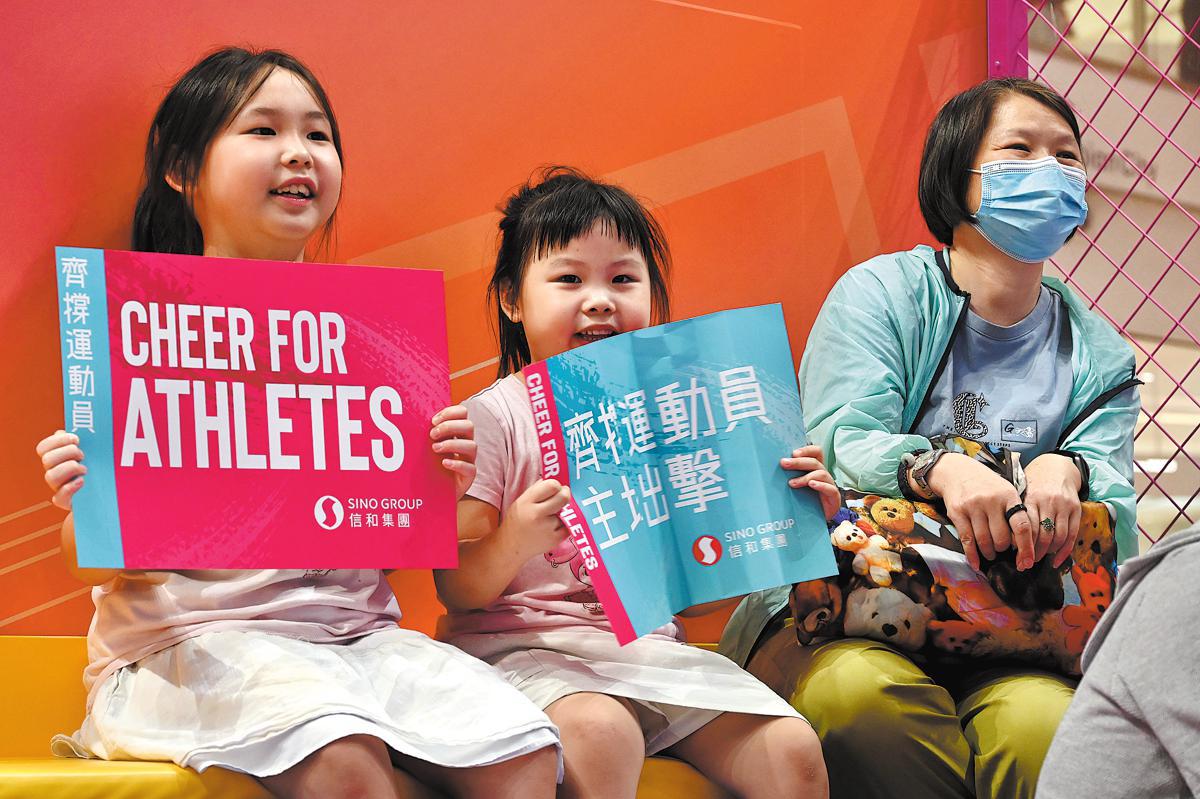
By successfully co-hosting the ongoing 15th National Games, the Hong Kong Special Administrative Region has demonstrated that it has what it takes to evolve beyond the sporting arena, shape strategy and drive long-term momentum to capitalize on the event, experts said.
Sports executives and policy experts called for carrying out institutional groundwork and innovating sports-finance solutions to foster a sustainable sports economy that would benefit the Guangdong-Hong Kong-Macao Greater Bay Area and the country as a whole.
Speaking to China Daily, World Table Tennis CEO Steve Dainton said that Hong Kong ticked all the boxes when it came to "vision, capacity and connectivity to the wider sports economy".
Commenting on the fact that the city has been chosen to host table tennis' season-ending WTT Finals in December, Dainton said: "When you put all of this together — event capability, international appeal, and a city that already thinks in terms of big events — Hong Kong becomes a very natural home for the WTT Finals."
Dainton said he believes that for sports tournaments to generate long-term economic and social value, host cities should be clear about the benefits of hosting, build true collaboration between stakeholders, and focus relentlessly on the quality of experience, especially for fans.
"The encouraging thing about Hong Kong is that many of the fundamentals of a sustainable sports-events ecosystem are already present," Dainton noted. "The next step is more about linking them together around a common story."
According to him, there is strong public support for strengthening Hong Kong's role in the mega events economy. "The city has a robust tourism appeal, a strong business community, and a base that already understands sports like table tennis. When those elements are aligned, each major event reinforces the next," he added.
Kenny Shui, vice-president of Our Hong Kong Foundation and executive director of the Public Policy Institute, said the greater spillover and broader impact cannot happen without the SAR government's strategic coordination to align large-scale sports competitions with art and MICE events — meetings, incentives, conferences and exhibitions — in a bundled manner.
Shui highlighted the significance of deeper institutional groundwork. One path, he said, would be to transform the National Games Coordination Office — set up by the Culture, Sports and Tourism Bureau of Hong Kong in 2023 — into a permanent entity to host large-scale multi-sports events.
Leveraging Hong Kong's entrenched status as a world-renowned financial hub, Shui suggested introducing sports-related financial products, such as event rights trading, sports bonds and real estate investment trusts in the city's market, which would allow Chinese mainland investors to access global sports assets with ease.
"Furthermore, the city can serve as a clearinghouse for international sponsorship agreements, athlete endorsements and intellectual property licensing, thereby lowering barriers for Chinese brands entering global leagues," he said.
"Funds raised for major events in Hong Kong can be reinvested into the Greater Bay Area infrastructure, creating a virtuous cycle where sports drives urban development," he added.
As the Chinese sports industry expands its global footprint, Shui said that Hong Kong's robust initial public offering market and private equity channels are valuable platforms for raising capital to support overseas acquisitions and international marketing. Leading brands such as Anta and Li-Ning have already leveraged Hong Kong as a springboard for international growth — from mergers, overseas retail expansion to sponsorships.
Chi Sum Li, head of government and public sector in Hong Kong for KPMG China, noted the city's unique value in "soft infrastructure", including international standards, IP protection and global connectivity.
"It can drive the regional sports economy by coordinating standards, facilitating cross-border collaboration for sports tech, and supporting the development of a sports brand of the Greater Bay Area for international promotion," Li said.
sophialuo@chinadailyhk.com

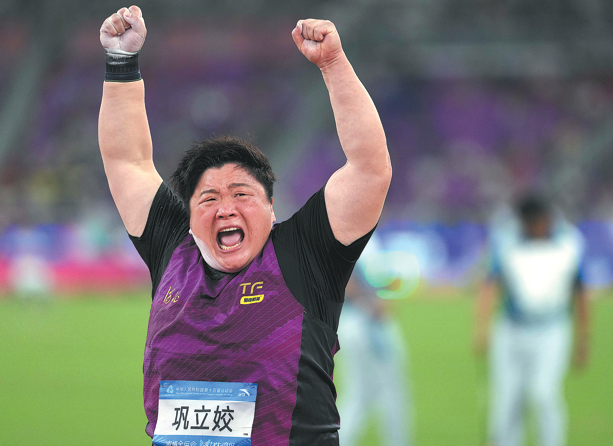
When Gong Lijiao stepped into the shot put circle on Sunday night, she knew the moment would mark the end of a journey that began more than two decades ago.
Holding the shot, bending her elbow, turning and unleashing one final effort — the Olympic champion completed her last throw at the 15th National Games with the same intensity that defined her career.
As the metal ball landed, Gong thrust her arms into the air and shouted. She bowed deeply to the crowd at the Guangdong Olympic Sports Center Stadium in Guangzhou, and then the tears came — a release shaped by grief for her late mother, the thrill of clinching her fifth consecutive National Games title and the ache of leaving the arena for the last time.
At 36, Gong was the undeniable focal point of the evening. The "five-time veteran" of the National Games delivered a throw of 19.68 meters to defend her title and complete an extraordinary five-in-a-row sweep of the women's shot put — a feat unmatched in the Games' history.
Her journey began on the National Games stage, when she arrived as a teenager from rural Hebei. Over the years, she evolved from a promising newcomer into the figure who carried the weight of China's hopes in women's shot put on the global stage, breaking barriers with Olympic and world championship golds and defining an era in Chinese women's throwing.
Even with the championship already secured before her final attempt on Sunday — three of her first five throws had already exceeded 19 meters — Gong refused to let the final moment slip by. She stepped into the circle and gave everything she had left.
"No matter how far it goes, this is my final throw on the field. It's a throw worth remembering and cherishing," she said, recalling the moment.
Love, she said later, was what kept her going all these years. After the competition, she walked the field to shake hands with officials and waved to the stands one last time. When asked to summarize her career, she chose three words: "perfect," "regret" and "perseverance".
"Today, the 'five consecutive titles' feels perfect," she explained.
"The regret is definitely Paris — my form wasn't good and I was injured. And perseverance… I kept going because I loved it, and I wanted to make shot put, a relatively niche event, more popular.
"I'm grateful to myself, for never abandoning or giving up all these years, for holding on until the end for the dream in my heart.
"The journey was tough, but with so many honors, it was all worth it."
From a rural girl, to a national, world and Olympic champion, Gong's athletic life was defined by repetition — the same set of movements practiced millions of times. They took an inexorable toll and, ultimately, it was her body, not her will, that forced her to step away.
"My knee injuries have seriously affected my daily life. I'm even afraid to climb stairs," she said.
Her mother's passing early this year added another emotional weight.
"After I finished my final throw, the first person I thought of was my mom. I hope she could see it," she said.
Talking about her mother during a post-competition interview, Gong broke down. She wiped away her tears quickly and tried to smile, but emotion overwhelmed her.
"I really wish my mom could have seen it. I've done it. I achieved the five-straight titles."
Looking ahead, Gong plans to take a long break, undergo surgery and rebuild her daily life.
But retirement will not take her away from the sport she loves. She will join the Hebei athletics center as a coach, passing on the torch of Chinese women's shot put to young talent like Zhang Linru and Ma Yue — and she hopes to play a role in promoting the event nationwide.
She wants to see more Chinese throwers stand tall on the international stage, she said, and continue writing new, glorious chapters in Chinese athletics.
And though she has stepped away from the circle, the legacy she leaves behind — the records, medals and the generations she has inspired — will go much further than her final throw.

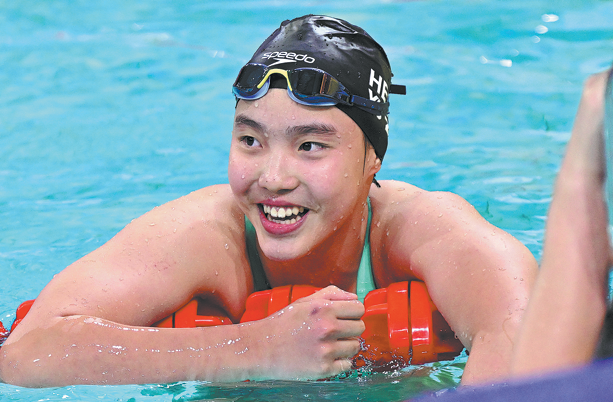
At the Shenzhen Universiade Center on Monday, the swimming program at the 15th National Games finished with an unexpectedly youthful surge.
Among seasoned stars and established champions, it was 13-year-old Yu Zidi from Hebei who stole the spotlight, leaving the pool with three gold medals, one silver and one bronze. Her performances signaled not only the arrival of a prodigy, but perhaps the beginning of a new era in Chinese swimming.
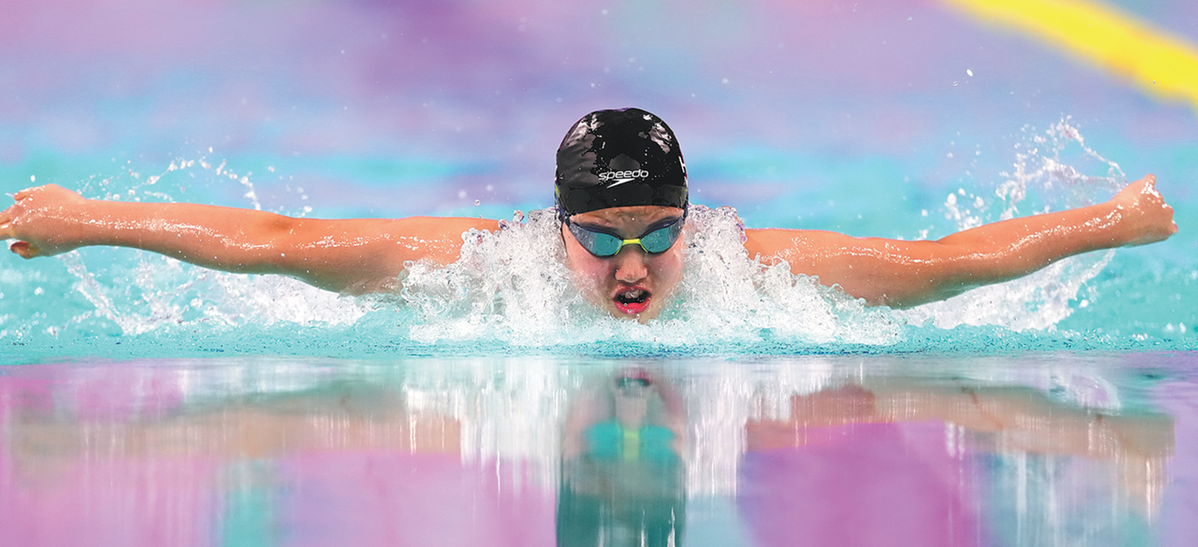
Yu's most dazzling moment came in the women's 200m individual medley, where she stopped the clock at 2:07.41 and broke an Asian record that had stood for 13 years. She went on to add a silver medal in the women's 200m butterfly, beating Olympic champion Zhang Yufei.
The breakout did not come out of nowhere. Earlier this summer, at the World Aquatics Championships in Singapore, Yu — then only 12 — had already shown that she belonged to the world stage.
She finished fourth in the women's 200m butterfly and both the 200m and 400m individual medley finals. Though she repeatedly brushed against the podium without quite making the step onto it, her performances were enough to establish her as one of the most promising young talents anywhere in the sport.
From that debut to her stunning results at the National Games, Yu now fully embodies the title of Chinese swimming's "future star".
After her record-breaking 200m individual medley on Nov 11, Yu was still trying to process what she had done.
"I'm very happy, very excited," she said. "Before the race, I felt that refreshing my personal best would be enough. I didn't expect to swim this fast."
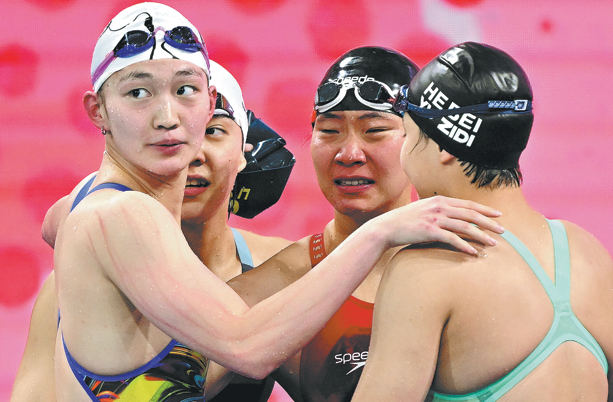
The time was three seconds faster than her result at the world championships and broke the Asian and national record of 2:07.57 set by Ye Shiwen at the London Olympics in 2012 — before Yu was even born.
"I didn't see my time clearly," she admitted. "Suddenly I heard that the Asian record had been broken, and I was wondering who broke it. I didn't expect it to be me!" Yu called the moment "unbelievable", adding: "I had only one feeling — I wanted to cry!"
Her surprises did not end there. In the 200m butterfly, she surged ahead of Zhang Yufei, one of China's most accomplished swimmers. Before the race, Zhang had gently patted Yu on the shoulder.
Zhang later explained that she wanted Yu's path to be smooth, but also hoped she would encounter moments that would help her grow. A completely smooth journey, Zhang said, is not always ideal for an athlete — but she also didn't want Yu to lose confidence because of any setbacks.
Yu continued her momentum by helping the Hebei team win gold in the women's 4X200m freestyle relay. Her split time of 1:57.98 was the fastest she had ever swum.
Looking back on her overall performance at the National Games, she gave herself a score of 90. "I'm generally satisfied," she said. "I did my best in the races, but there are still areas I can improve, especially my breaststroke technique. I will keep working hard and try to do even better next time."
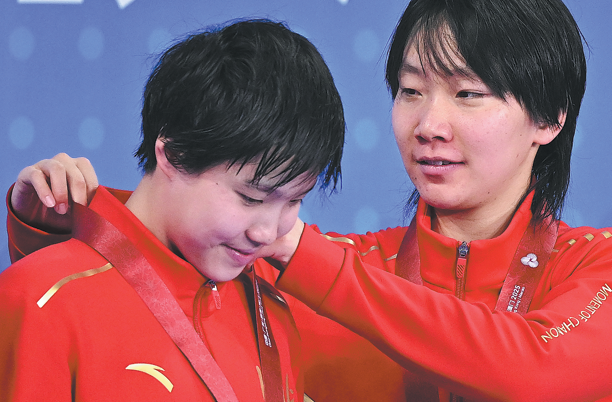
After the swimming program ended, Ye approached her with a smile. "When I broke the world record in the 400m individual medley, I was also wondering who it was that had broken it," Ye told her. "Your feeling today was just like mine."
Ye said she was sincerely happy to see her own record fall.
"Records are meant to be broken," she said. "Congratulations to Yu for beginning her own era. I'm very happy to see such a strong new generation in Chinese swimming, and I look forward to seeing her continue to perform miracles for China on the international stage."
Yu's journey in the water began with something much simpler than medals or records — a summer filled with play. When she was six, her father used to take her to a water park, where she discovered an instinctive joy in the water.
While other children hesitated or clung to floats, Yu seemed to merge with the element, floating effortlessly and paddling forward with a natural rhythm. Her instinctive "water sense" caught the eye of Li Chao, a coach with the Baoding swimming team, who happened to see her at the pool.
"She wasn't the kind of child who was especially outgoing," Li recalled. "But once she got into the water, she was completely different.
"Her kicking was great — she just whooshed forward. She wasn't scared to jump in, and even when the water covered her head, she wasn't afraid."
With her father's agreement, Yu began formal training.
Her rise was swift and steady: she joined the provincial training team at age nine and began competing at the national level at 10.
She garnered wider attention during the National Swimming Championships in May, where she won the 400m individual medley and the 200m butterfly.
She achieved the A standard in all three of her events, qualifying for the world championships and quickly attracted global attention.
At the Singapore worlds, the youngest athlete in the entire competition became one of its most talked-about. Yu reached the finals in all three of her individual events and finished fourth in each.
She also swam in the preliminaries of the women's 4X200m freestyle relay, helping China win a bronze medal — making her the youngest medalist in the history of the world championships.
She has been training with the national team since the start of the year alongside Li Bingjie, another swimmer from Baoding, who also rose to fame as a teenager.
Li Bingjie has become something of a big sister, sharing her experience generously and helping Yu navigate the pressures of international competition.
Yu once wrote in her journal: "I hope that when I grow up, I can be like Li Bingjie — become a world and Olympic champion and know what that feeling is like. It's very tiring, but as long as I can swim, I will definitely work hard and bring glory to my country."
Following her mentors and predecessors, Yu is moving steadily toward her dream of competing at the Los Angeles Olympics.
From a child joyfully splashing around in a summer water park to a teenager breaking continental records and leaving seasoned champions in her wake, she is already carving out a lane through the choppy waters of competitive swimming.
liyingxue@chinadaily.com.cn

Qing'ao Bay on Nan'ao Island in Shantou, Guangdong province, hosted the four-day surfing competition of the 15th National Games from Nov 13 to 16, attracting surfing enthusiasts from home and abroad. Watch the video and ride the waves with us!

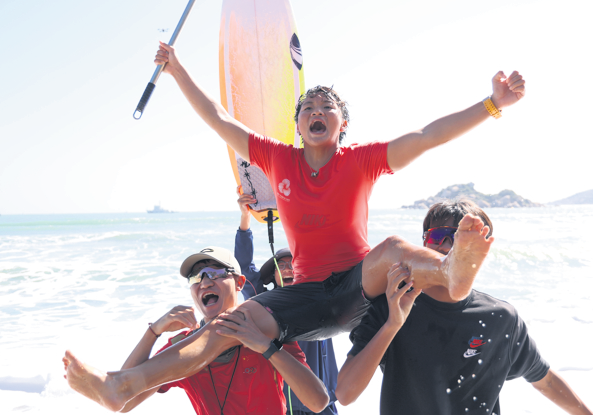
Born inland, in a mountainous area of Southwest China's Sichuan province, Yang Siqi's origin couldn't be more at odds with her sporting career — catching breakers atop a surfboard.
The nation's first-ever Olympic surfer, while hailing from miles above sea level, seems to have been born with sea legs, as she once again solidified her status as China's top shredding talent by claiming the women's shortboard gold medal at the 15th National Games on Sunday.
The 16-year-old prodigy claimed the victory with a final score of 14.00 points, defeating Liaoning's Jin Shuhan by a significant 5.33-point margin.
During the four-day surfing competition, held from Nov 13 to 16 at Qing'ao Bay on Nan'ao Island in Shantou, Guangdong province, the weather alternated between sunny and overcast, with waves ranging from powerful to choppy. However, for Sunday's final, the bay experienced the best conditions of the entire four-day event, with clear skies and consistent swells, providing Yang with a stable platform to showcase her high-flying jumps and explosive turns on the waves.
"Today's weather and sea conditions were very favorable. It's all about training hard and being able to reproduce that level when it's time to compete," said Yang who, at the Paris 2024 Olympics, became the first and only surfer to represent Team China.
"Going through the Olympics has taken my experience, wave-reading skills and mental approach to a new level. I feel much more mature as a surfer now," Yang added.
Last summer, defying the odds in the challenging waves of Teahupo'o, Tahiti, the then-15-year-old Yang — also the youngest surfer at the Paris Games — made history for China. She powered through two rounds to advance to the last 16, ultimately securing a tied-ninth-place finish.
"Surfing is a very exciting sport and every race is a new challenge," said Yang.
"I'm so glad that, thanks to the sport's inclusion in the Olympics, and to my debut as a Chinese surfer at the Games, we are seeing more young people pick up the sport."

Unexpected journey
Yang's journey to the waves was unexpected. Growing up in the mountainous Liangshan Yi autonomous prefecture in Sichuan, the sea was once a distant concept for Yang.
She was an energetic and lively child from a young age. Her uncle introduced her to a sailing team affiliated with an acquaintance, which required training in Hainan province. Thus, at the age of eight, Yang saw the ocean for the first time.
After a year of sailing, an opportunity exposed her to the new sport of surfing.
In 2018, the Chinese national surfing team was officially established, and surfing programs subsequently opened in Sichuan. Around the same time, as sailing was dropped from the National Games program, Yang and her teammates collectively transitioned to surfing.
This involuntary shift, however, led her to discover her true passion.
"After I started surfing, I found it much more interesting than sailing. Every training session felt incredibly fun. Over the years of training, even when sessions were long and my body felt tired, I never found it particularly hard or exhausting," Yang recalled.
Her passion and dedication to surfing began to pay off as her results steadily improved. She participated in the National Surfing Championships every year from 2018 to 2023, winning the title multiple times.
At the World Surfing Games in Arecibo, Puerto Rico, in March 2024, Yang secured her Olympic quota spot by winning the Repechage Round 6 with a score of 11.83 points. This achievement guaranteed her place among the 24 women who would go on to compete in the Paris 2024 surfing event in French Polynesia, writing her name into the nation's history books.

Her achievement has resonated far beyond last year's Games.
"Having a Chinese surfer compete in the Olympics is significant for casual surfing enthusiasts like us," said Lin Jianfeng, a surfer from Shantou.
"Without her participation, it would be difficult for us to watch the television broadcast domestically and appreciate world-class surfers riding massive waves."
Perry Hatchett, the former head judge for the Association of Surfing Professionals (now World Surf League) who currently coaches the Shandong team, sees this as a crucial developmental step.
"She is absolutely the best," Hatchett remarked, noting her visible joy for the sport.
He emphasized that competing internationally is key to her growth, allowing her to experience diverse conditions from China's sand breaks to the coral reefs of the Maldives and Australia.
"Surfing in such varied conditions teaches you to navigate different ocean situations," he explained.
"You learn to read the ocean, to identify the good spots, to find safe places for an easy paddle out. The key is to work with the ocean, not against it. If you fight the ocean, you'll never win."


The cheers at Hong Kong's Kai Tak Sports Park lingered long after the final buzzer. More than 5,000 fans rose to their feet, clapping and shouting as the Hong Kong men's handball players gathered at center court — arms wrapped around one another, tears mixing with sweat.
They didn't win. The team fell 33-25 to Beijing in the bronze-medal match at China's 15th National Games on Nov 10.
While the scoreboard didn't tell the whole story, the fourth-place finish marked Hong Kong's best-ever result since first competing in the National Games nearly three decades ago.
The Hong Kong men's handball team fielded a squad of 16 amateur players, a group rarely favored in pre-tournament predictions. What remained largely unknown, however, was the sacrifice behind their story: almost every player either resigned from their job or took unpaid leave to compete.
"Out of the 16 players, 15 currently don't have full-time jobs," said Ho Chung-ho, chairman of the Handball Association of Hong Kong, China. "There's no stable salary. What keeps them going is just the passion for the sport."
Unlike the professional teams from the Chinese mainland, Hong Kong's players come from ordinary walks of life — firefighters, flight attendants and personal trainers among them.

Team captain Tse Wing-fai, a handball coach who also runs a workout studio, recalled that their training sessions used to take place late at night, squeezed in after long shifts. "Sometimes we couldn't even gather everyone because someone had overtime or an emergency duty," Tse said.
"But the moment we stepped onto the court, the exhaustion disappeared," he added.
Handball — a fast, physical seven-a-side sport that combines the pace of basketball with the contact of rugby — has never been a mainstream discipline in Hong Kong.
The local handball movement began in the 1970s. Although the Hong Kong Amateur Handball Association (now the Handball Association of Hong Kong, China) was founded in 1970, the sport long remained on the fringe due to limited facilities and funding.
When Hong Kong first competed at the National Games in 1997, the hastily assembled team finished ninth. In 2005, they broke into the top eight, and, in 2017, they finished sixth — then a record. But a stubborn cycle persisted: modest results meant limited support, which, in turn, restricted progress.
Without access to the government's elite sports funding tier, the team often trained outdoors on hard concrete courts, managing just one indoor session per week. Weather disruptions were common, and the unforgiving surface heightened the risk of injury.
"Compared to the systematic support enjoyed by professional mainland teams, the gap in training conditions is enormous," said head coach Hui Man-pong.
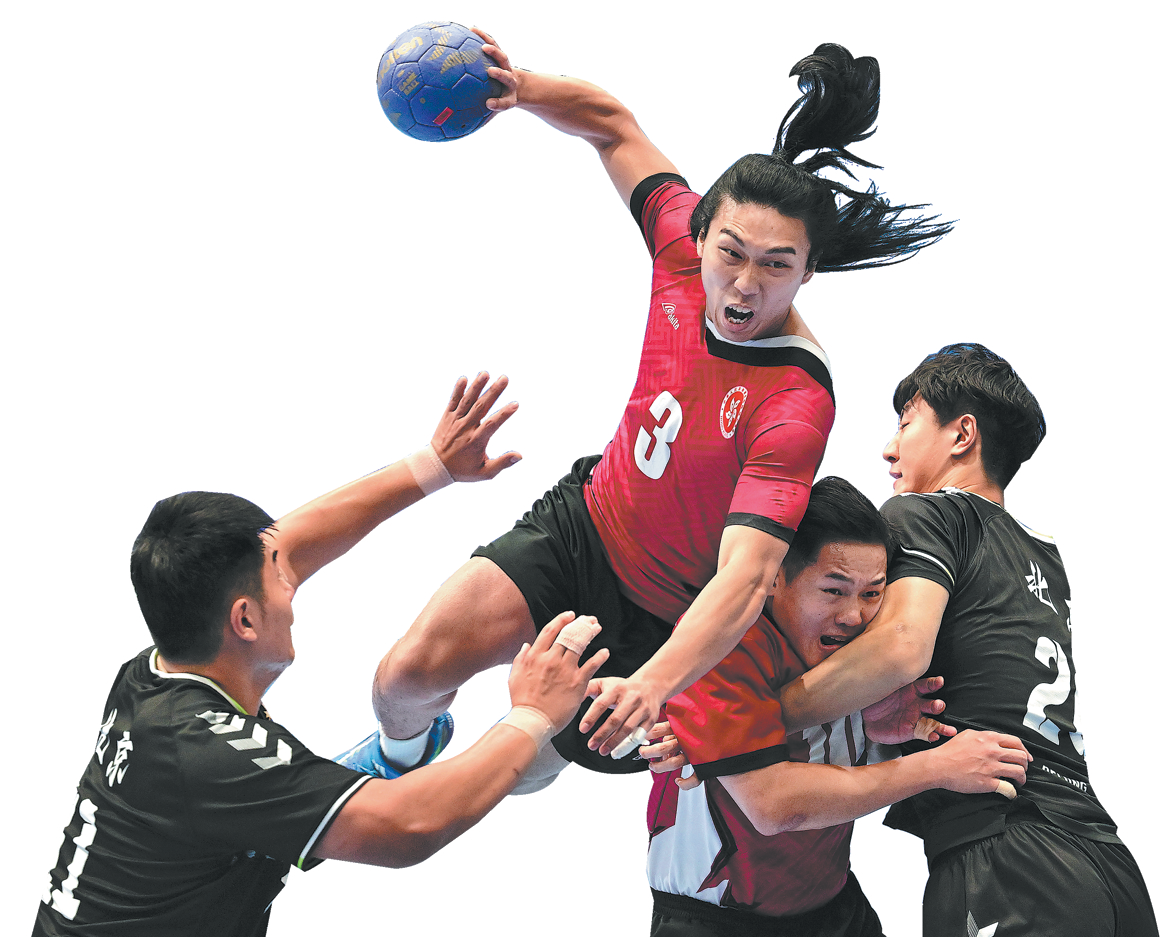
The 2025 National Games, co-hosted by Guangdong province and the special administrative regions of Hong Kong and Macao, offered Hong Kong a rare opportunity: to play on home soil. For a group that had spent years training in the shadows, it felt like a calling.
"After discussing with the players, we all agreed — if we want to beat professional teams, we must first become as professional as possible ourselves," Hui said.
So the team made an unprecedented decision in Hong Kong handball history: to fully commit to the Games. Nearly the entire squad stepped away from their jobs to train full-time.
They studied match videos frame by frame, managed their diets like professionals and followed a rigorous training schedule matching that of national-level teams — all despite their limited resources.
Hong Kong's path at the 2025 Games became a storybook run: defeating Macao and Shanghai in the group stage, stunning Guangdong in the quarterfinals, and pushing Anhui to the final minutes in a narrow three-goal semifinal loss.
The fourth-place finish was more than a statistic — it was proof that passion and discipline could bridge a seemingly impossible gap.
Hui struggled to describe the moment. "I imagined this scene many times," he said softly. "But when it actually happened, I still couldn't believe it was real."
For Ho, the team's breakthrough carries meaning far beyond a single tournament.
"The National Games allowed more people to see Hong Kong handball," he said. "It brings hope and possibilities for the sport's future development in Hong Kong."
Xinhua


The ongoing 15th National Games are playing a major role in helping Guangzhou, the Guangdong provincial capital, accelerate its development as an internationally renowned sports hub.
In addition to further raising Guangzhou's image at home and abroad, the National Games, which are being jointly hosted by Guangdong province and the special administrative regions of Hong Kong and Macao, have helped promote the city's sports industry development and spark public enthusiasm for sports participation, said Zhu Xiaoyi, deputy director of the Guangzhou division of the executive committee of the 15th National Games.
"When we look at world-class cities around the globe, most are internationally renowned sports hubs that possess a wealth of sports venues and facilities," said Zhu.
Zhu, also deputy director-general of Guangzhou municipal government, made the remarks at a news conference over the weekend.
After the Guangzhou division of the executive committee was officially established two years ago, the southern metropolis accelerated the renovation and construction of its sports venues to meet the requirements of a world-renowned sports city, he said.
According to Zhu, of 62 large-scale sports venues, 30 were selected for "targeted minor renovations".
"We promoted the quality improvement of both the interior and exterior of the venues in an integrated manner, ensuring they meet the requirements for both domestic and international competitions," he said.
And, during the buildup to the 15th National Games, specialized and innovative enterprises based in Guangzhou participated heavily in the preparations, contributing to the smooth hosting of the massive, multisport event.
"In table tennis, the Hawk-Eye challenge system being used is provided by Guangzhou-based enterprises," Zhu noted.
"And for the opening ceremony on Nov 9, we launched the world's firstof-its-kind power supply model, featuring high-reliability municipal power, plus new energy storage as the main supply, replacing the traditional diesel generator microgrid," he added.
Zhu explained that the new model helped save about 31 metric tons of diesel consumption and reduces carbon dioxide emissions by around 96 tons per performance, adhering to the principle of hosting a "green, streamlined, safe and splendid "opening ceremony.
At the opening ceremony, a total of 2,950 volunteers transformed into "little dolphins" — nicknamed after the mascots of the National Games — creating a warm and efficient volunteer service network, ensuring the successful operation of the opening ceremony.
After the conclusion of the opening ceremony, they contributed to the efficient and orderly exit of the audience, which set new records. The venue was clear of all attendees in 36 minutes, and they boarded their return transportation within 55 minutes.
Since the start of the year, 11,000 volunteers have successfully completed support tasks for 11 large-scale events, with a total volunteer service time exceeding 310,000 hours, Zhu said.
Over the course of these historic cross-boundary Games, the hosting capability of the whole Guangdong-Hong Kong-Macao Greater Bay Area has enjoyed an international stamp of approval.
Thomas Bach, the IOC's honorary president for life, said that the GBA has the capability to one day host the Olympics.
"If you look at the scope of the National Games, they are bigger than the Olympic Games," he told local media at Kai Tak Stadium in Hong Kong last week after watching the first day of the rugby sevens.
"You have many world-class sports facilities, you have a sports-loving public, you have all the ingredients needed, so, one day, I think it would be a very good candidate for the Olympics," he said, adding that the GBA should "go for it".
Already seeing the benefits of hosting the Games, Zhu said he is pleased to learn the competition venues in Guangzhou, including the Guangdong Olympic Sports Center, Tianhe Sports Center and the sports center at the Guangzhou Higher Education Mega Center, have been fully booked to host events throughout 2026, further strengthening Guangzhou's position as an international sports hub.
World Athletics chose Guangzhou as the host city when the 2025 World Athletics Relays Championships made its debut in China.
Attracting over 70 athletes from 43 countries and regions, Sebastian Coe, president of World Athletics, told the Yangcheng Evening News at the time that "Guangzhou is a city that truly understands the importance of sports ... and its leadership clearly grasps the true value and meaning of sports."
Zhu said Guangzhou has hosted over 240 major international sports events since the 2010 Guangzhou Asian Games.
"So far this year, it has organized more than 500 sports events and activities at all levels and of various types," he added.
Last year, Guangzhou's sports industry totaled 237.23 billion yuan ($33.51 billion), the fourth straight year it has exceeded 200 billion yuan, said Zhu.
He noted that the city's sports consumption was 63.13 billion yuan, with a per capita figure of 3,345.51 yuan, ranking among the highest in China.

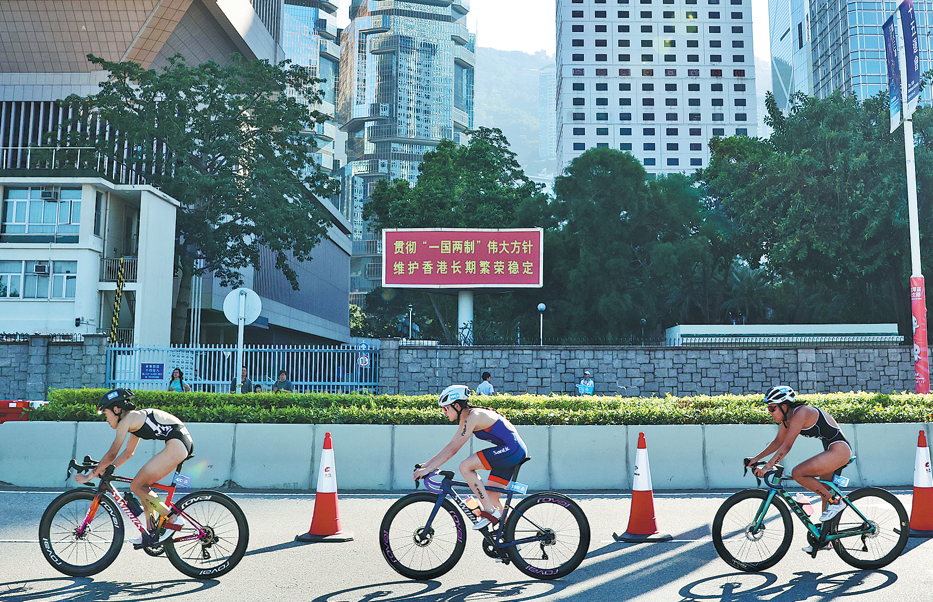
Hong Kong's Central Harbourfront has long been one of the city's most iconic open spaces, a meeting point of sea, sky and steel. But last weekend, it transformed into a dynamic sporting arena as the triathlon events of the 15th National Games took over the waterfront.
With crowds lining the promenade and athletes slicing through the blue waters of Victoria Harbour, the familiar skyline seemed to vibrate with a rare intensity.
The two-day competition crowned champions in the men's and women's individual races as well as the mixed relay.
The course offered a striking journey through the heart of the city: a 1.5-kilometer swim, starting from the temporary Wan Chai waterfront park, a 37.8km bike ride past landmarks such as the Hong Kong SAR Government Headquarters and the Legislative Council Complex, and a 10km run that followed the waterfront before finishing beside the Hong Kong Observation Wheel.
Few triathlons anywhere in the world unfold against such a spectacular urban panorama.
The women's race opened the weekend's events. Sichuan athlete Lin Xinyu, who achieved a historic 28th-place finish for China at the Paris Olympics, took an early lead during the cycling segment. Yet the run shifted the momentum: Huang Anqi from the Sports Association of Public Security team overtook Lin and held her advantage to win the gold medal with a 55-second lead, leaving Lin with silver.
The roar of the spectators left a deep impression on Huang. "The course and environment were excellent, and the spectators were incredibly enthusiastic, which motivated me even more," she said. "This time, it felt like the entire course was surrounded by spectators. Their energy was far beyond what we usually experience, and it made me even more excited."
Lin, a frequent competitor in Hong Kong, said the city felt like a lucky place for her. "The volunteers and officials were very dedicated, and all the athletes' needs were catered to. I had a really wonderful experience," she said.
For many athletes, the race offered a chance to see Hong Kong from an entirely new perspective.
Victoria Harbour may be described as Hong Kong's most beautiful horizon, but for athletes, swimming directly across its waters remains an extraordinary privilege.
Hong Kong representative Hilda Choi said the race felt surreal.
"Central has many iconic buildings. Normally, people come here to walk, picnic, relax, or even run along the waterfront. But I never imagined we'd get to swim in Victoria Harbour."
She explained that training there is nearly impossible due to strong winds and constant marine traffic, but racing with the skyscrapers rising on both sides created an experience she said no other city could replicate.
Similar admiration came from Henan athlete Fan Junjie, who took the men's gold medal. "I've raced in Hong Kong many times, and the scenery here is stunning, especially around Central and Victoria Harbour," he said.
"I really hope I can come back again to cycle here."

Hong Kong's Oscar Coggins added to the excitement, snagging bronze for the home team in the men's race. He then joined Bailee Brown, Robin Elg and Cade Wright to win silver in the mixed relay the following day.
Competing at home, he said, was a moment of pride. "I hope this venue will be used continuously for triathlon events in Hong Kong and for people who want to get involved in the sport, or even just continue to watch," he said.
Reflecting on the relay, he added: "The mixed relay event is special because it's the only chance where you get to compete and celebrate as a team. My teammates have put in a really strong performance to make that result possible."
The Hong Kong relay team had trained at high altitude in Yunnan province for five weeks, preparation that brought it within just 11 seconds of beating defending champion Shandong.
Brown said that racing in front of home supporters brought both pressure and joy.
"I was nervous before the race because competing in Hong Kong added extra pressure — we didn't want to let the home crowd down. We love this city and want to make it proud," she said. "We are thrilled to win a medal, the color doesn't matter to us!"
Among all the athletes, one story, particularly, resonated — that of Macao triathlete Hoi Long. She lost her hearing at five months old due to a medical accident, yet for decades she has carved out a place for herself in a sport defined by discipline, resilience and mental endurance. Hoi learned to communicate by reading lips and has built a life balancing full-time work and elite athletic training.
She has competed in triathlon, long-distance running and cycling, winning Macao's first triathlon medal at the Asian Games with a bronze in 2018. In Hong Kong, she finished eighth in the women's individual race and left the event satisfied with her performance.
By Sunday, the triathlon had become part of Victoria Harbour itself — athletes pushing through water and pavement as the skyline rose around them. For a moment, sport and city merged, writing another chapter in the history of Hong Kong's iconic cityscape.

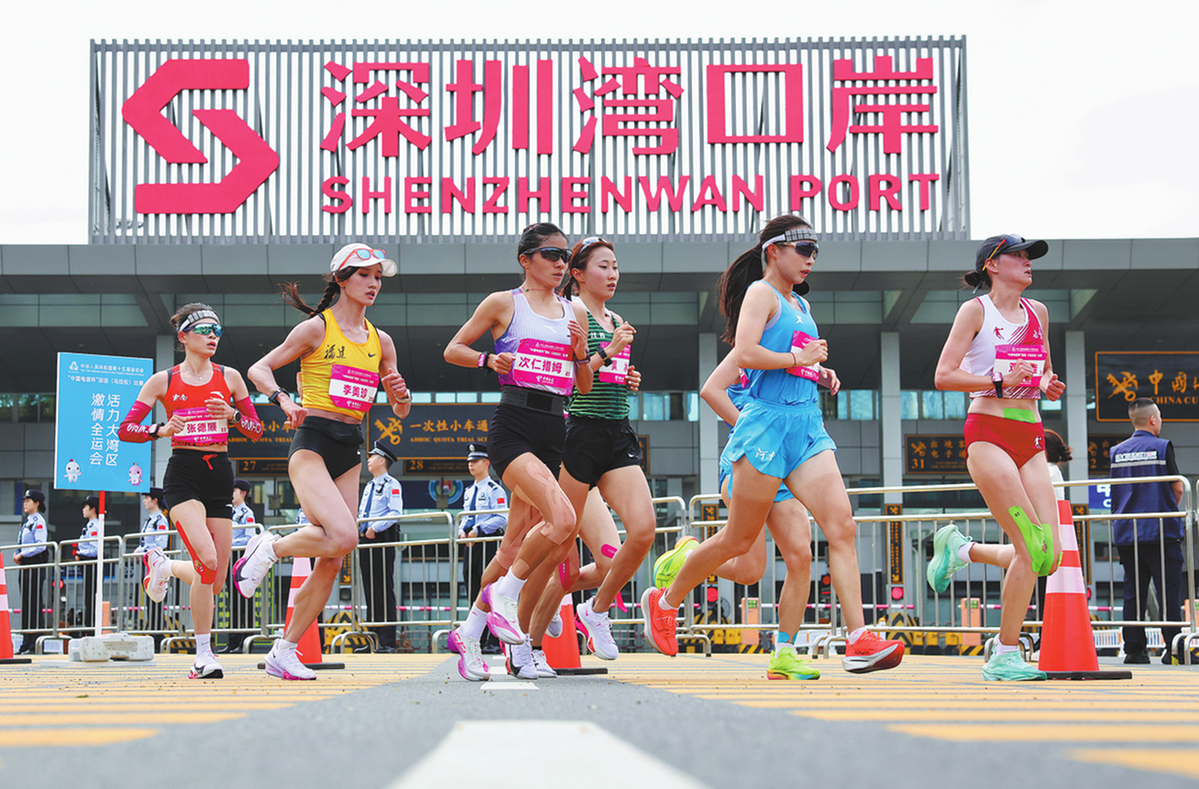
Running on the scenic Shenzhen Bay Bridge, cool sea breeze in their hair, was undoubtedly the highlight of the first cross-boundary marathon in China's historic 15th National Games, said athletes who participated in the 42-kilometer race that included the 5.5-km bridge connecting Guangdong province with the Hong Kong Special Administrative Region.
The sporting extravaganza, which is being co-hosted by Guangdong and Hong Kong and Macao SARs, is making people at home and abroad better understand how integrated the Guangdong-Hong Kong-Macao Greater Bay Area has become, they added.
He Jie, an athlete from the Ningxia Hui autonomous region, who clocked 2 hours 12 minutes 7 seconds to clinch gold on Saturday in the men's marathon, said the race was a new and special experience for him.
"I've never taken part in a cross-boundary marathon before, and my first impression was that all the infrastructure, including the cross-sea bridge, is so nice. I've traveled around the world to run marathons, but the design and the infrastructure of the course here is hard to beat," said He, who holds the current national record in men's marathon and is also an Asian Games gold medalist.
The athlete, who trained hard in Kenya to represent his home region Ningxia in the National Games, became visibly emotional after crossing the finish line. "I will come back in my own time to take a good look at the beautiful landscape along the route," he said.
The marathon's starting point and finish line were the Shenzhen Bay Sports Center. Runners entered Hong Kong through the Shenzhen Bay Port, crossed the Shenzhen Bay Bridge and Kong Sham Western Highway Viaduct, and then turned back and returned to Shenzhen through the same route.
Zhang Shunde, an athlete from Yunnan province, who clocked 2:30:20 to win the women's marathon gold, said the course was dotted with iconic landmarks of Shenzhen and Hong Kong, making it an extraordinary experience.
"Although I was focused on the race, I couldn't help but notice how blue the sea was. The environment and the design of the entire course ... are definitely among the highlights of this year's National Games," she said.
Lu Ying, from Henan province, who finished the marathon in 2:30:44 and won bronze, said it was exciting to cross the boundary between Shenzhen and Hong Kong without having to slow down even a bit.
"I've never run through the checkpoints before. With this wristband, we automatically completed the boundary check procedure without stopping. It's such a unique experience," she said, pointing to the band on her left wrist equipped with radio frequency identification tags.
Tech boost
Kuang Bing, deputy executive director of the Executive Committee for the Shenzhen Competition Zone of the 15th National Games, said that RFID readers connected to the Beidou Navigation Satellite System have been installed at checkpoints to instantly verify registered athletes' names and other details, which are stored in the tagged wristbands.
The system ensures zero contact and zero delay, he said. "We've introduced smart customs clearance, ensuring athletes experience no waiting time at Shenzhen Bay checkpoints. Also, we have adopted a preclearance and closed-loop arrangement throughout the event."
Kuang highlighted the use of advanced digital technologies to monitor the event in real time. "We used facial recognition to identify athletes and real-time GPS tracking to monitor both runners and vehicles. Drones offered live coverage to support race management and emergency response," he said.
More important, Shenzhen established a multichannel and multilevel communication mechanism with the marathon organizers in Hong Kong, which ensured thorough coordination in areas such as course management and comprehensive support, achieving seamless connectivity and professional collaboration in event organization, Kuang said.
"The event served as an important window to highlight the vitality of integration in the Greater Bay Area," he added.
Lam Wing-cheung, an athlete from Hong Kong, said that slopes along the course and crosswinds made the race more challenging.
"It was nevertheless a very good experience for me, because it was my first time participating in the National Games," said Lam, who finished in the 19th place.
Bridging bonds
With connectivity in the Greater Bay Area significantly enhanced in recent years, exchanges among athletes have also advanced, he said. "I often train with athletes from Macao and take part in marathons held on the Chinese mainland, which have helped to improve my performance."
Leanne Szeto from Hong Kong, who finished 27th in the women's marathon, said she hopes that more cross-boundary races are held in the Greater Bay Area in the future.
"When I was a child, going to Shenzhen with my parents meant waiting in long lines, but now we can just use gates equipped with facial recognition technology. Also, I never imagined t-hat one day I would be able to run back and forth between Shenzhen and Hong Kong," she said.
Zhang, the women's marathon gold medalist, said the competition provided athletes from the Chinese mainland, Hong Kong and Macao with the opportunity to come together.
"By competing on the cross-boundary course, we inspired each other and became more united, just like the Greater Bay Area," she said.
The marathon is among the two cross-boundary disciplines in the ongoing 15th National Games. The men's individual road cycling race, which covered Guangdong's Zhuhai, and Hong Kong and Macao SARs, was held on Nov 8.
cuijia@chinadaily.com.cn


MACAO - Shanghai's Fan Zhendong beat Lin Shidong of Hainan 4-1 to defend the table tennis men's singles title at China's 15th National Games here on Sunday.
Despite a slow start, Fan came back from 9-4 down to pocket seven points in a row to clinch the first game 11-9.
Lin, 20, won the second game 11-8, but 28-year-old Fan was unstoppable afterwards, taking the next three games 11-5, 11-3, 11-4 for the gold.
"At the beginning, I didn't feel at ease. I continued to elevate my performance and felt delighted to seize the gold," Fan said after his fourth appearance in the singles final at the National Games.

"Each Games tells a new story at different stages of my career. It is always difficult to top the podium at the National Games. What I need to do is to keep improving my skills and mentality. My next goal is to help Shanghai achieve a great result in the team event," Fan said.
At the Paris 2024 Olympic Games, Fan won both the men's singles and team gold medals, becoming the 11th player in history to achieve a career Grand Slam of Olympic Games, World Championships, and World Cup.

Despite a runner-up finish, Lin already made history, becoming the first Hainan paddler to reach the final at the National Games.
"This medal has exceeded my anticipation. I am satisfied with my performance, feeling proud to win the honor for my hometown," said Lin.
Earlier in the day, world No. 1 Wang Chuqin of Beijing cruised past Liaoning's Yuan Licen 11-9, 11-8, 4-11, 11-5, 11-7 to secure bronze.


GUANGZHOU -- China's National Games held its first-ever cross-boundary marathon on Saturday, with both men's and women's races run on a course spanning Shenzhen in Guangdong Province and Hong Kong.
China's national record holder He Jie of Ningxia pulled away near the 35-kilometer mark and held the lead to finish in 2:12:07. Gao Peng of Yunnan finished seven seconds behind to take silver, while the bronze went to Wu Xiangdong of Anhui in 2:12:33.
"I finished fourth at the last edition of the National Games four years ago, which was hard to accept," said the 26-year-old He. "I ran many races in the past four years, and I won gold at the Asian Games in Hangzhou. But today's gold made me the happiest."
After twice improving the national marathon record, which currently stands at 2:06:57, He did not hide his ambition to break it again.
"My next goal is to break the 2:06:00 barrier. That's the dream for me and my coach," he said.
In the women's race, defending champion Zhang Deshun of Yunnan broke away from a three-runner leading pack after 40 kilometers and finished in 2:30:20, holding off her rivals by five seconds. Ciren Cuomu was second, followed by Lu Ying of Henan in 2:30:44.
A total of 71 athletes competed, including five from Hong Kong and one from Macao. The 42.2-kilometer course ran through Shenzhen's Nanshan District and Hong Kong's Yuen Long District. The Shenzhen section was 20.3 km and the Hong Kong section 21.9 km, with the start and finish in Shenzhen.
The marathon featured facial recognition technology and "zero delay, zero contact, zero waiting" customs clearance for personnel, vehicles and materials to ensure smooth operations.
In addition to staging the first cross-boundary marathon, the National Games debuted the mixed 4x100 meters relay at the Guangdong Olympic Sports Center, where in-stadium athletics events also began on Saturday.
The Fujian team, consisting of Lin Yuwei, Ge Manqi, Xiao Yuanpeng and He Jinxian, stormed to a national best mark of 40.37 seconds to win the new event, which has been included in the program of the Los Angeles 2028 Olympic Games. The relay features a running order of woman, woman, man, man.
Sichuan finished second in 40.78 and Hubei third in 40.92.
In the 4x400m mixed relay final, pre-race favorite Guangdong held off a strong challenge from Sichuan to win in 3:17.54, while Sichuan clocked 3:17.66 and Hebei finished third in 3:19.99.

Tourism in the Hong Kong Special Administrative Region is surging on the back of the 15th National Games being held from Nov 9 to 21.
As one of the three co-hosts of the games, together with Guangdong province and the Macao SAR, Hong Kong will stage elite sports events such as basketball, track cycling, triathlon and golf, which are anticipated to draw in crowds.
Hotel bookings, attraction visits and sales of games' merchandise have all seen a spike in early November, said industry insiders.
Hotel demand has risen year-on-year, with citywide occupancy hitting about 70 percent by mid-November, according to Timothy Chui, executive director of the Travel Industry Council of Hong Kong.
Christina Cheng, general manager of the Fullerton Ocean Park Hotel Hong Kong, has noticed a marked increase in guests. "We believe the tourism uplift brought about by the National Games will extend beyond the immediate period and generate a steady, positive impact," she said.
"Roughly 35 percent of our guests are currently from the Chinese mainland," Cheng added.
The Hong Kong Tourism Board has estimated that the games would attract more than 100,000 additional visitors to the city.
Travel businesses have moved quickly to tailor services, with operators widening offerings beyond simple ticketing to include transportation, non-competition itineraries and centralized hotel reservations, said Chui from the Travel Industry Council of Hong Kong.
China Travel Service (Hong Kong) has launched combo tickets linking the games' rugby sevens events with visits to Ocean Park, or fencing tickets with Ngong Ping 360 cable car rides.
"The National Games have deepened integration across Guangdong, Hong Kong and Macao," said Secretary for Culture, Sports and Tourism Rosanna Law Shuk-pui. "Guangdong agencies are offering 'Follow the National Games, Tour the Greater Bay Area' routes — diving in Guangdong today, table tennis in Macao tomorrow, fencing in Hong Kong the next day — bringing 'one trip, multiple destinations' to life. And with November being Hong Kong's peak season, visitors will have a wealth of options."
Liu Jiapeng, a public affairs manager at travel portal Trip.com Group, said the games have lifted travel search interest across the Guangdong-Hong Kong-Macao region, with particularly noticeable jumps in queries for hotels near competition venues in Macao and for attractions such as Hong Kong Disneyland and Ocean Park.
Official merchandise is also selling briskly.
Hong Kong Post Office, one of the licensed retailers, reported that products blending mascot designs and local cultural elements were especially popular. These included blind-box plush toys created for the Hong Kong events, tote bags printed with the mascots, keychains featuring magnetic table tennis rackets, and pins and magnets showcasing the city's iconic landmarks.
Each event brings more than ticket revenue, Law added, it activates the entire value chain — from staging and security to catering, hospitality and retail — supporting thousands of jobs. "This truly fulfills the idea of 'one event, benefiting the entire city'. The live broadcasts of many events also showcase Hong Kong's major attractions, offering a prime opportunity to highlight the city's tourism appeal."
akirawang@chinadailyhk.com

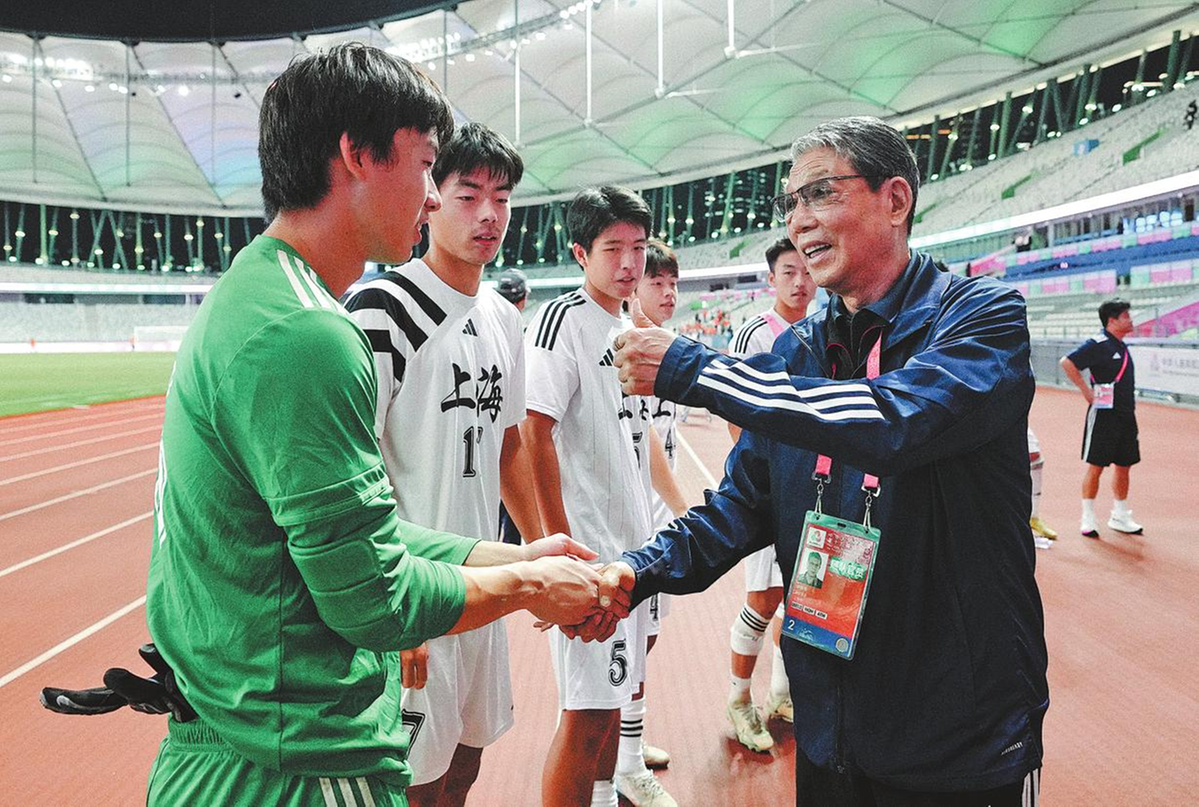
At 81 years old, veteran soccer coach Xu Genbao has no plans to give up his coaching career, even after failing to lead the Shanghai team to the gold medal in the men's under-20 soccer category at the 15th National Games.
"Why should I call it a final curtain? I can still train young players," said Xu, pausing for a moment and responding firmly to reporters, after the Shanghai team claimed bronze.
At the Bao'an Sports Center in Shenzhen, Guangdong province, on Wednesday evening, the Shanghai team, led by Xu, defeated Shandong 5-4 in a penalty shootout in the men's under-20 soccer bronze medal match.
The Hubei team defeated Guangdong 6-4 in the final, earning the province its first-ever gold medal in the games' men's under-20 soccer history.
Before the opening of the games, jointly hosted for the first time by Guangdong, Hong Kong and Macao, Xu took on the role of head coach of the Shanghai team once again, with many considering that it might be the final outing in his legendary coaching career.
"This time, I am very eager to lead the team to win the gold medal, as the weight of a silver or bronze medal is quite different," said Xu before the games.
Given that most of the team's players only trained together for a month before the opening of the games, Xu still believed the final result was acceptable.
In the semifinals against host Guangdong, the Shanghai team's gold medal dream came to an abrupt end when an unnecessary foul gave the opponents a penalty kick in the 87th minute.
"I stood for 90 minutes, constantly shouting — my players might not have heard me," said Xu.
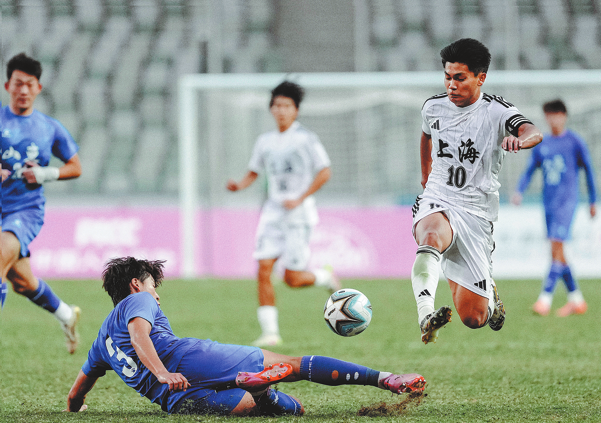
Due to an unfavorable draw, the Shanghai team played five matches in 10 days, the most intensive schedule in the game's men's under-20 soccer match calendar, with key players like Li Xinxiang and Liu Chengyu playing until they were injured.
Xu admitted that he was "a bit tired". "The past two weeks have been really exhausting, with meetings, training and matches held every morning and afternoon — after all, I'm 81 years old," he said.
The coach has developed a long history with the games. At the fourth edition in 1979, Xu led the Shanxi team to the top eight.
He led the Shanghai team to win the gold medal in the under-20 men's soccer event for the first time at the 11th edition of the games in 2009, held in Shandong province.
In the subsequent two games held in Liaoning province and Tianjin in 2013 and 2017, respectively, the Shanghai team, also led by Xu, achieved a hat-trick in the soccer event by winning the gold medal three times in a row.
As a representative figure in China's youth soccer training, Xu established a training base in Chongming, Shanghai, in 2000, which has helped develop and supply a large number of players to various national teams.
Renowned players developed by the training base include key national team members such as Wu Lei, Zhang Linpeng, Yan Junling and Zhu Chenjie. Among them, Wu Lei, who played for Espanyol in La Liga for over three seasons, has become a leading figure in the national team.
In discussing his coaching career, Xu has said on several occasions that if Chinese soccer does not rise to prominence, he cannot consider himself successful.
"We cannot claim success — we can only say that we have made an effort. For me, I can be considered a hardworking coach," he said.
Considering his old age, some people might question Xu's technique and tactics, which focus on pressing, forcing and surrounding.
"Some people say I'm outdated, but they don't know that I watch Manchester City and Barcelona matches quite often — the concepts of pressing, forcing and surrounding and receiving, passing and turning are quite close to the world's advanced ideas," he said.
After coaching for more than four decades, Xu hopes to find someone who can take over from him.
"If younger players show their talent and the team is good, I will coach again, although I won't have as much energy as I did before," he said.
"I hope that in the future, the national soccer team will produce some true stars who have the ability to qualify for the World Cup," Xu added.
qiuquanlin@chinadaily.com.cn

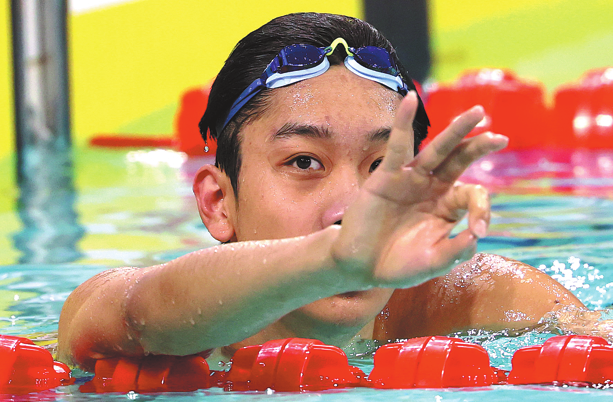
For rising swimming sensation Zhang Zhanshuo, going up against Chinese titans of the pool Sun Yang and Pan Zhanle at the 15th National Games in Shenzhen, Guangdong province this week, must have been nerve-racking.
But for the cool-headed 18-year-old Shandong native, he converted any nerves into wins and broken records.
Zhang has become one of the shining stars of the National Games in Shenzhen, capturing gold in the men's 400m, 200m and 800m freestyle events — breaking the national youth record in all three.
His rapid rise has positioned him as China's most promising new force in men's mid— and long-distance freestyle, and a major medal hope for the 2028 Los Angeles Olympics.
After winning gold in the men's 800m freestyle on Thursday night, Zhang celebrated by holding up three fingers in the pool — signifying his third individual gold medal of the games.
The pragmatic and humble teenager remained modest afterward, saying that his performance in the pool hadn't improved significantly and that he would need to reflect carefully after the event.
"Like I said on the first day, I never think about what it would mean if I win or don't win. I just want to face everything as a challenger. For me, the most important thing is to do my best and set a good example," Zhang said.
This is Zhang's first appearance at the National Games, and the young athlete hasn't cracked under the pressure of competing against his senior teammates. On the opening day, he stunned the crowd by defeating Sun and Pan in the men's 400m freestyle, winning in 3:42.82 — a new world junior record.
Zhang later admitted that he had not set any expectations for his time before the race.
After the race, three-time Olympic gold winner Sun was generous with his praise for the young swimmer.
"I think Zhang is an excellent athlete. He has a long future ahead of him. I hope he takes every step well and carries the future of China's men's mid— and long-distance freestyle," he said.
Two days later, he repeated the feat in the 200m freestyle, again beating Sun and Pan and clocking 1:44.86, just 0.14 seconds shy of Romanian David Popovici's winning time at the Paris Olympics last year.
After each victory, however, Zhang has displayed a composure far beyond his years. "Once you step off the podium, everything starts again from zero," he said after the race.
Despite the soaring expectations, Zhang has remained firmly on the ground. "There are still many top swimmers in this event. I'm very satisfied with my performance today. The key is to stay calm.
"Just because you swim a good time at a big meet doesn't mean you forget who you are. You have to stay grounded."
He also stressed the value of hard work over talent, saying: "There are many people with more talent than me. You have to give up certain things — give up playtime, give up distractions. Only when you give up can you gain."
Zhang openly calls Paris 100m freestyle gold winner Pan his idol, saying that as a newcomer, he has not yet reached that level and still needs to keep chasing higher goals.
"I'm happy, but there's really nothing to celebrate. Yu Zidi is only 13 and already broke the Asian record. I still need to learn from others. It's the younger generation who will carry the future of mid— and long-distance freestyle," he said.
Ji Xinjie, who won silver in men's 200m freestyle, also spoke highly of Zhang. "I'm really happy to see him achieve such great results. I've always believed he has unlimited potential. For the Chinese swimming team, he is an invaluable asset," he said.
Away from the pool, Zhang remains a cheerful teenager. After winning a gold medal earlier, he playfully grabbed a microphone from State broadcaster China Central Television and began interviewing Ji. "How do you feel?" he asked. As a journalism student at Fudan University, Zhang got a taste of being a reporter ahead of time.
Born in 2007, Zhang began swimming at age 6. With both talent and determination, he quickly made a name for himself. His coach, Lin Yiming, said that at age 6, Zhang represented his district at the Qingdao city games in Shandong and won seven gold medals in individual events.
"This kid is hardworking — really hardworking. He's extremely disciplined and works harder than other children," Lin said. "He's only 18. His golden period will last about 10 more years. I hope he wins an Olympic gold one day."
His athletic roots run deep. Zhang's mother, Ding Lina, was a middle— and long-distance runner for the Shandong track and field team, and his father is also a sports enthusiast. Ding said she sent him to learn swimming years ago simply to improve his health, never expecting it would lead to where he is today.
"I often tell him that as a national athlete, he must go beyond personal ambition and think of the 'big national interest'. He must pursue excellence and win glory for the country. In our family, we understand that every honor is a new starting point," Ding said.
Despite his young age, Zhang is already familiar with the international stage. At the 2024 World Aquatics Championships in Doha, Qatar, he teamed up with Ji, Wang Haoyu, and Pan to win gold in both the men's 4X100m and 4X200m freestyle relays.
This August in Singapore, Zhang partnered with Ji, Pan, and Wang Shun to win silver in the men's 4X200m freestyle relay at the World Aquatics Championships.
Zhang's schedule at the National Games is far from over. He is still set to compete in the men's 1500m freestyle, 400m individual medley and 4X100m medley relay. For China's newest swimming prodigy, his moment in the spotlight has only just begun.
liyingxue@chinadaily.com.cn


Gu Zhanzhao from Team Shanghai chose a particularly triumphalist piece of music from the movie The Hunger Games for his freestyle routine with his horse Qumulus-Quintus Ah in the equestrian dressage individual final at the 15th National Games in Guangdong province on Wednesday.
Meanwhile, his teammate Xu Mofei chose the song We Will Rock You by Queen for her routine, because, she noted, her horse Hao Hao, with whom she has partnered since June 2023, always enters the arena with a bang.
The duo did indeed rock the Shenzhen Guangming International Equestrian Center on Wednesday, snatching silver in the individual event with 69.520 points.
As well as making a statement with their unconventional choice of music, the 17-year-old Gu said that the nation's young riders have also laid down a marker at the equestrian center, underlined by the likes of Xu who made it onto the podium, adding: "Furthermore, the new generation of Chinese riders are ready to wow the world."
On Monday, the four riders of Team Shanghai, with an average age of just 20, had already taken the team event by storm, winning gold with a total score of 202.470 points, while the Xinjiang Uygur autonomous region and Guangdong teams took the silver and bronze medals, respectively.
Gu, 17-year-old Xu and Wu Yue, 20, also made it to the individual final.
All three riders have been receiving quality systematic training in Europe, which has given them the opportunity to learn the latest techniques from the best in equestrian field from an early age, said Gu, who has been training and competing in dressage in Germany and the United States for three years.
"Equestrian sports, including dressage and show jumping, have become increasingly popular in China in recent years, and many young people have taken up equestrian events and started to train overseas. The results are now starting to show," Gu said.
Influenced by his father — a longtime dressage enthusiast — Gu fell in love with the event when he was just a child. Supported by his family, he now has five horses in Europe and six in Shanghai he trains with, and his passion and determination to excel in the sport has continued to grow. "When I train and compete in Europe, I often find people don't take young riders from China seriously, so I want to work hard and change their perception," Gu said.
"The older generation of riders look to control the horses, but we have learned to communicate with them," explained Xu. "I know Hao Hao is tired when he rubs my shoulders with his nose."
"We also want to contribute to the development of China's promising equestrian industry by bringing back new concepts and training techniques from Europe, especially in emphasizing the attention to detail and the training of young horses," Xu, who has been training in the Netherlands and Belgium, added.
Wu, who trains in the United Kingdom and is currently studying at a university there, said young Chinese riders have already started to shine on the international stage.
"By receiving systematic training overseas, or with foreign coaches, young riders can progress quickly. More importantly, they can ensure that we are on the right track from the very beginning," he said.
Individual gold medalist and two-time team silver medalist, Liu Tao, said he's glad to see the young riders perform well in Shenzhen and become strong competitors.
"Unlike a lot of us older riders, who had to keep adjusting our training techniques and correcting mistakes made when we were young, they have had the opportunity to work with top coaches and horses in Europe from the start," said the 37-year-old Team Xinjiang veteran, who won his first individual National Games title at the 12th edition, held in Liaoning province, in 2013.
"Their full potential is yet to be unleashed," he promised.
Liu said he, too, will keep competing, saying he would like to continue for another 20 to 30 years.
Gu welcomed the move: "I really admire the veterans for their courage to keep going. This kind of spirit is truly rare and valuable."
Gu added that, like Liu, the younger generation of riders all share the same goal: "We are all training hard to see the Chinese national flag being raised at international equestrian competitions, including the Olympics."

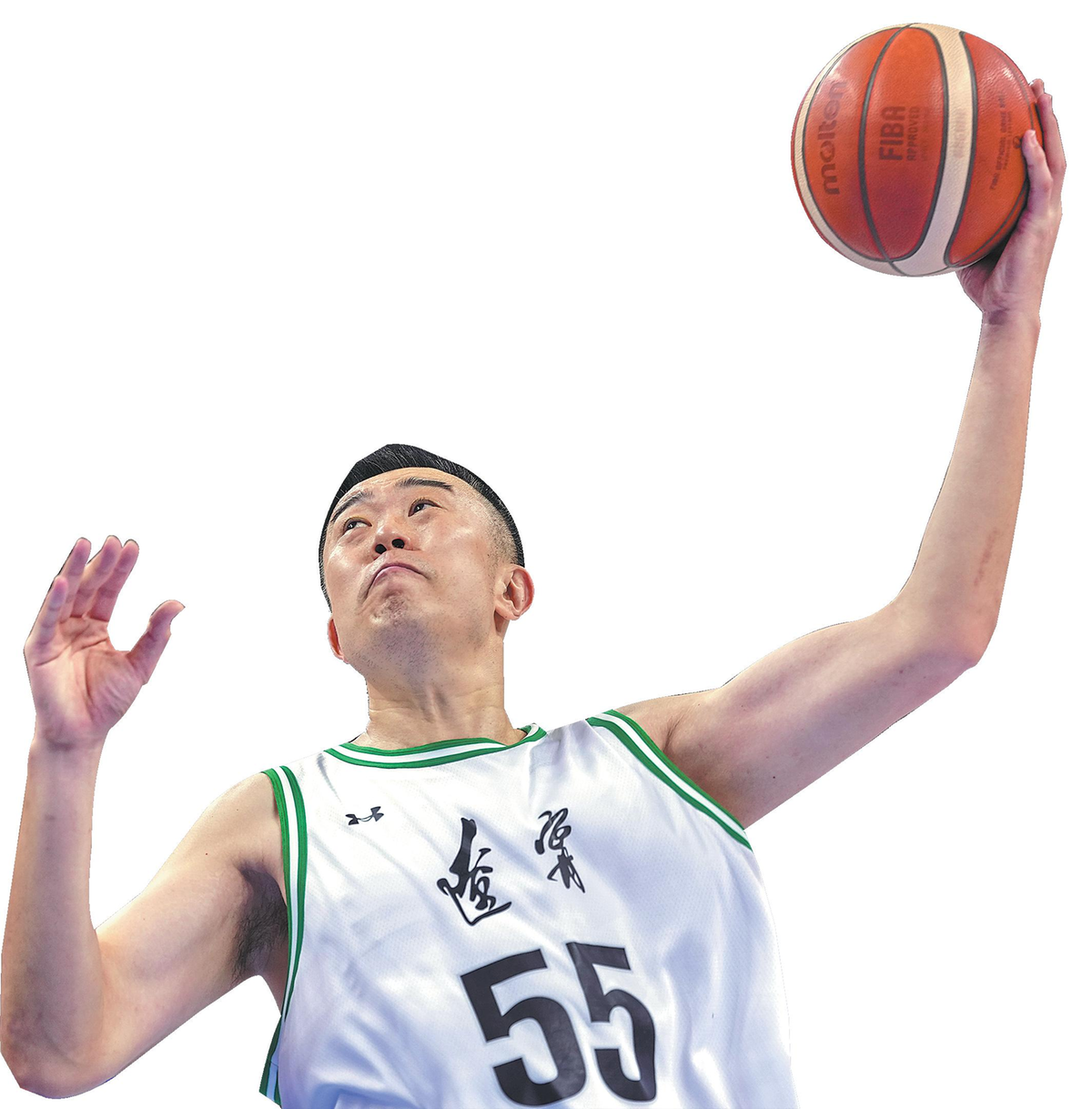
Every time basketball veteran Han Dejun is substituted during a game, he has a ritual: a salute to the crowd in a different direction. On Wednesday, in the men's bronze-medal match of the 15th National Games in Dongguan, Guangdong province, Han gave his final salute.
At 38, Han officially retired after the match, in which Liaoning lost 60-81 to Sichuan and missed out on a podium finish. In the gold-medal game, host Guangdong defeated Zhejiang 101-65, ending a 12-year wait to reclaim its National Games crown. At the previous two editions of the Games, its tilt at gold fell short, and Liaoning took the title both times, beating the Xinjiang team in 2017 and Guangdong in 2021.
This time around, though, the pair met in the semifinals. Guangdong's 92-73 victory over Liaoning has been hailed by fans as the two sides' most significant showdown over the past decade.
From 2013 to now, four National Games titles have been divided between Liaoning and Guangdong. The CBA champion sides, the Liaoning Flying Leopards and Guangdong Southern Tigers, have each won four championships. At its peak, the rivalry was celebrated by fans as the "Spring Festival gala of Basketball".
The epic rivalry has long transcended pure sport, becoming a symbol of Chinese basketball and a witness to the growth of a generation of players.
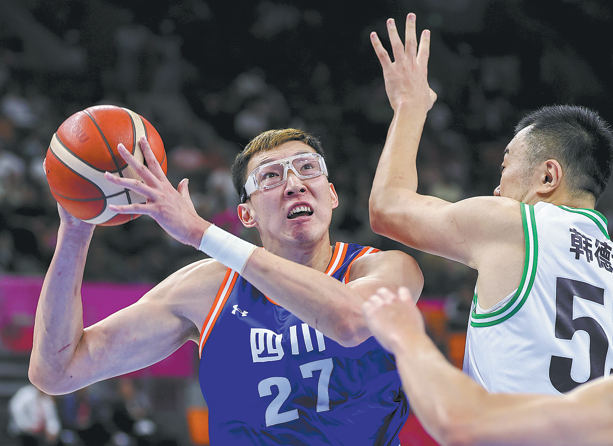
With Han's retirement, Liaoning faces the challenge of a generational transition, alongside the rise of teams like Zhejiang. The era of Liaoning-Guangdong supremacy is largely over, and the battle for dominance in Chinese men's basketball is entering a new chapter.
"Things have changed," said Guangdong head coach Du Feng after defeating Liaoning in the semifinals.
"The last National Games are still fresh in the memory. Liaoning relied on first-team national players like Zhou Qi, Han, Li Xiaoxu and Guo Ailun to win the championship. We had 'the black-white-short trio' of Zhao Rui, Hu Mingxuan and Xu Jie. All three of them are still playing, now four years older, and have become core members of the national team, receiving the baton from their predecessors," Du said.
"I think this is the essence of basketball inheritance, and also the mission of those devoted to the sport. I hope everyone involved in basketball can dedicate their efforts to the career they love."
Liaoning head coach Yang Ming, who transitioned from player to coach and has witnessed the rivalry on both sides of the paint, reflected on the significance of the matchup.
"The 'Liaoning-Guangdong' debate has been a heated one over the past decade. During this period, both teams produced many brilliant games. They won and lost against each other, needled each other, but cherished and enjoyed their time together," he said.
"Whether we'll see another rivalry at the same level in the future is hard to say, but I hope everyone remembers this wonderful period."
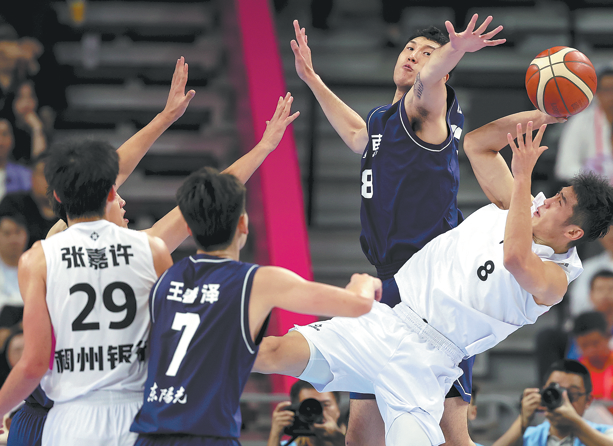
The Liaoning-Guangdong rivalry has mirrored the evolution of Chinese basketball. Beyond a clash of northern and southern styles, it has showcased tactical innovation, talent development and industry growth, becoming a national basketball event that carries both fan passion and regional culture.
Liaoning is known for its size and strength in the paint and defensive intensity, reflecting the resilience of Northeast China. Guangdong excels in fast transitions and smooth passing, highlighting southern teams' speed and strategy. These contrasting styles have clashed repeatedly, influencing each other and pushing the game toward greater balance and diversity.
The showdowns have provided a high-level competitive platform, encouraging the league to invest in youth development. Hu, for example, was named MVP in the 2021 CBA Finals matchup between Guangdong and Liaoning — a vivid illustration of how "big-stage" games can forge new talent.
Off the court, the rivalry has intertwined basketball with regional culture and shaped the memories of a generation of fans. Games between the two teams consistently drew peak viewership and social media attention, boosting the league's commercial value.
Looking ahead, it's likely that Chinese basketball will see new rivalries emerge, tactics evolve and new stars rise. Yet, the Liaoning-Guangdong battles will be remembered as a decadelong testament to dedication, passion and basketball excellence.
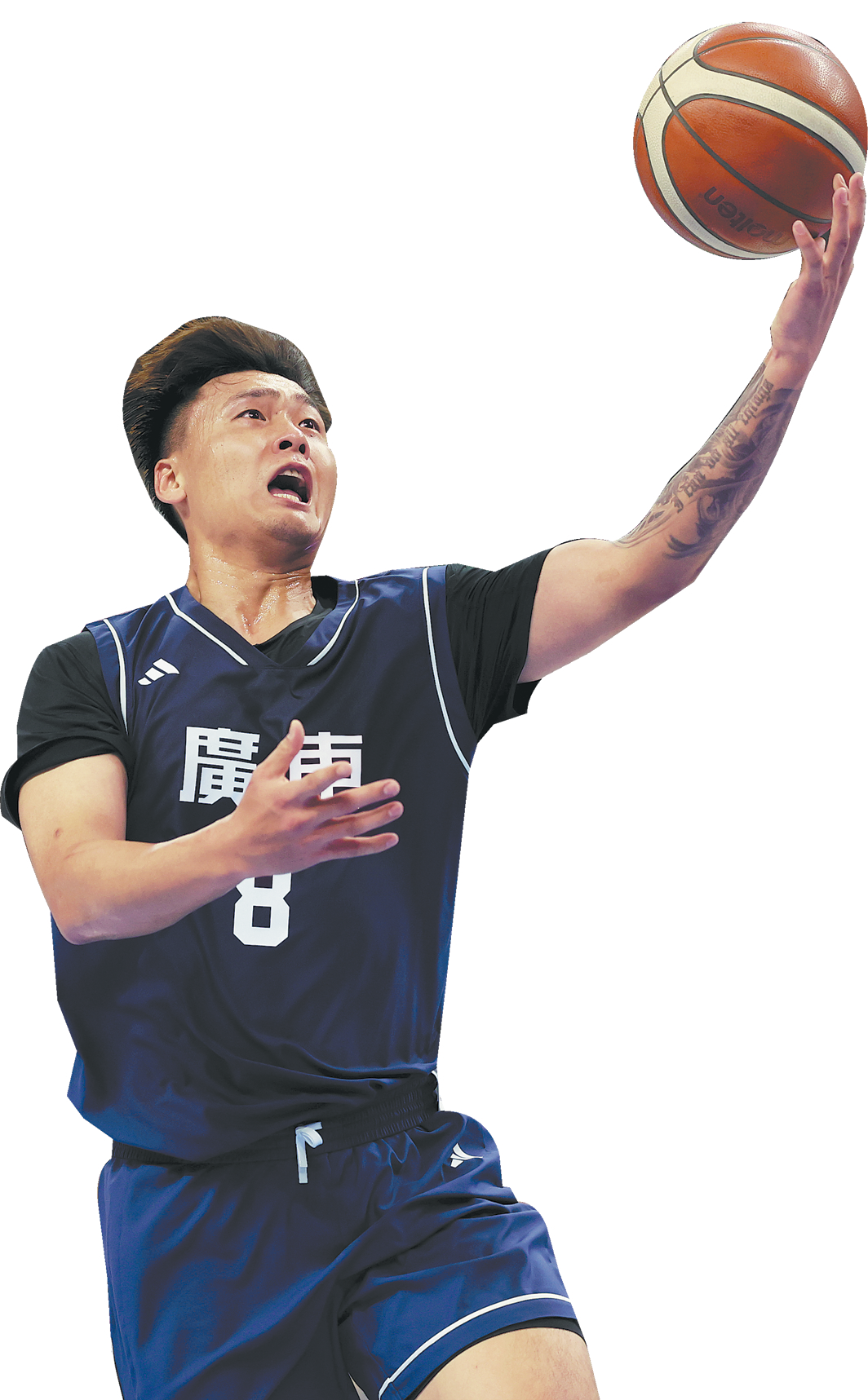
Farewell to a captain
Embodying all of those values, with two National Games titles and four CBA championships to his name, Liaoning captain Han chose the 15th National Games to close the final chapter of his 18-year professional journey — a farewell both personal and emblematic of the end of an era.
As Liaoning's captain, he led his teammates in cleaning the players' locker room after all matches concluded. "I want to stand my last post well," he said, "and leave the Liaoning team for the National Games in the best possible way."
Teammate Gao Shiyan expressed deep admiration: "Playing with him for so many years, he's more than a teammate, he's a brother. Even at 38, he fights so hard on the court, inspiring the entire team — he's our role model."
Zhou Qi, Han's former teammate and an opponent in the bronze-medal match with Sichuan, also sent his best wishes: "I can only wish him well, hoping he enjoys life even more now that there are no more games."
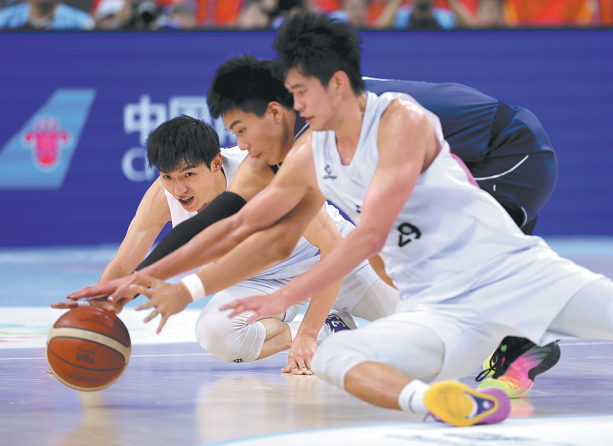
Han's career has been marked by dedication and loyalty. Since joining Liaoning in 2007, he spent 18 years with the team, remaining committed, even when offered record-breaking contracts by other clubs.
"I was born and raised in Liaoning. Contributing to Liaoning is what I should do," Han said.
During the semifinals at Dongguan Basketball Center, the arena was filled with Guangdong fans cheering loudly for the home team. After the match, the MC invited the crowd to salute Liaoning veterans Han and Li Xiaoxu.
"This is their last National Games as players. I think we should give them our applause, celebrate the Liaoning-Guangdong rivalry we've cherished, and honor our basketball youth," he said.
"To youth; never regret!"

Hong Kong pedal ace Ceci Lee Sze-wing's successful title defense in the women's road cycling individual event during the ongoing 15th National Games has once again turned the spotlight on the city's cycling team, which is known for its stellar show in premier tournaments.
Lee's gold is the second for the Hong Kong Special Administrative Region so far in this year's games, and she is also the third athlete from the SAR to triumph more than once at the National Games after Asian cycling legend Wong Kam-po and Olympian Sarah Lee Wai-sze.
While hard work and discipline form the mainstay of Hong Kong cycling team's medal-winning performances, the application of cutting-edge sports technologies developed through the joint efforts of the Chinese mainland and Hong Kong has been a significant contributor to its success.
A central research facility at Hong Kong University of Science and Technology, which specializes in developing high-tech aerodynamic and acoustic surroundings, boasts a low-noise wind tunnel that can simulate a cycling race environment.
This facility, when further empowered by the nation's Tianhe 2 supercomputer in Guangzhou, Guangdong province, can not only improve cyclists' riding postures, but also assist in the development of the most suitable bike design and cycling bodysuit for them.
Zhang Xin, director of the university's Aerodynamics and Acoustics Facility, highlighted the importance of using a supercomputer to develop sports technologies. As human muscle tissues and physical conditions constantly change, the computation process is complex and requires the use of a supercomputer, he said.
Athletes of the Hong Kong cycling team have worn aero-speed suits developed and tested in the wind tunnel to compete at various major sports events, including the Tokyo 2020 Olympic Games and the 2022 Asian Games in Hangzhou, Zhejiang province. These bodysuits, tailor-made for each athlete, are estimated to reduce wind drag by an impressive 3 percent.
Other sports disciplines, such as windsurfing and triathlon, have also employed simulations developed using the supercomputer and the wind tunnel to optimize the postures and movements of athletes.
During training sessions in Stanley on Hong Kong Island, sensors developed by the university recorded athletes' physical data, which was subsequently analyzed using the supercomputer.
According to Zhang, the Tianhe 2 simulated the wind conditions at the Paris 2024 Olympic Games and provided the information to head coaches of the windsurfing and sailing teams. The supercomputer helped to enhance athletes' posture optimization, as well as design and select equipment, he said.
Sports technology cooperation between the mainland and Hong Kong has deepened in recent years, with more agreements signed for further development, serving both professional athletes and the public.
In September, Hong Kong Polytechnic University and mainland sportswear brand Li-Ning signed a memorandum of understanding to establish the Li-Ning-PolyU Joint Research Centre for Sports Science, which aims to enhance technological application and promote industrial transformation in the sports and health sectors.
In Guangzhou, the Nansha Sub-Center of National Supercomputer Center provides the mainland's first supercomputer direct network line for Hong Kong. A dedicated high-speed fiber-optic network from the Tianhe 2 supercomputer is used to link Guangdong and Hong Kong's scientific innovation capabilities, enabling Hong Kong users to swiftly utilize the nation's supercomputing resources. The center has continuously provided support for technological innovation in Hong Kong and Macao.
For athletes from Macao and Hong Kong, traveling to the mainland for training and using sports technologies to improve their skills have become common.
Macao athlete Chan Man-hin, who participated in the National Games sailing event last month, said he was equipped with a high-end GPS tracker when he trained on the mainland. The device collected his performance data, including instantaneous speed and direction during sailing, for further analysis to help improve performance, he said.
"The piece of equipment allowed me to analyze all the training data and adjust my strategy for the day of the competition," Chan said.
The nation's support for sports development in its special administrative regions extends beyond hardware to include talent cultivation.
At Guangzhou Zhongshan Whampoa School for Hong Kong and Macao Students, a base has been established to provide a professional training platform for students from Hong Kong. Selected student athletes receive targeted training in five disciplines — fencing, swimming, equestrian, shooting and running.
These athletes also get more opportunities to participate directly in competitions at provincial, national and even international levels. By undergoing scientific and systematic training, they can gain recognition of the Sports Federation and Olympic Committee of Hong Kong, China, and have the chance to register as Hong Kong athletes, potentially becoming the city's elite sports representatives.
atlasshao@chinadailyhk.com







